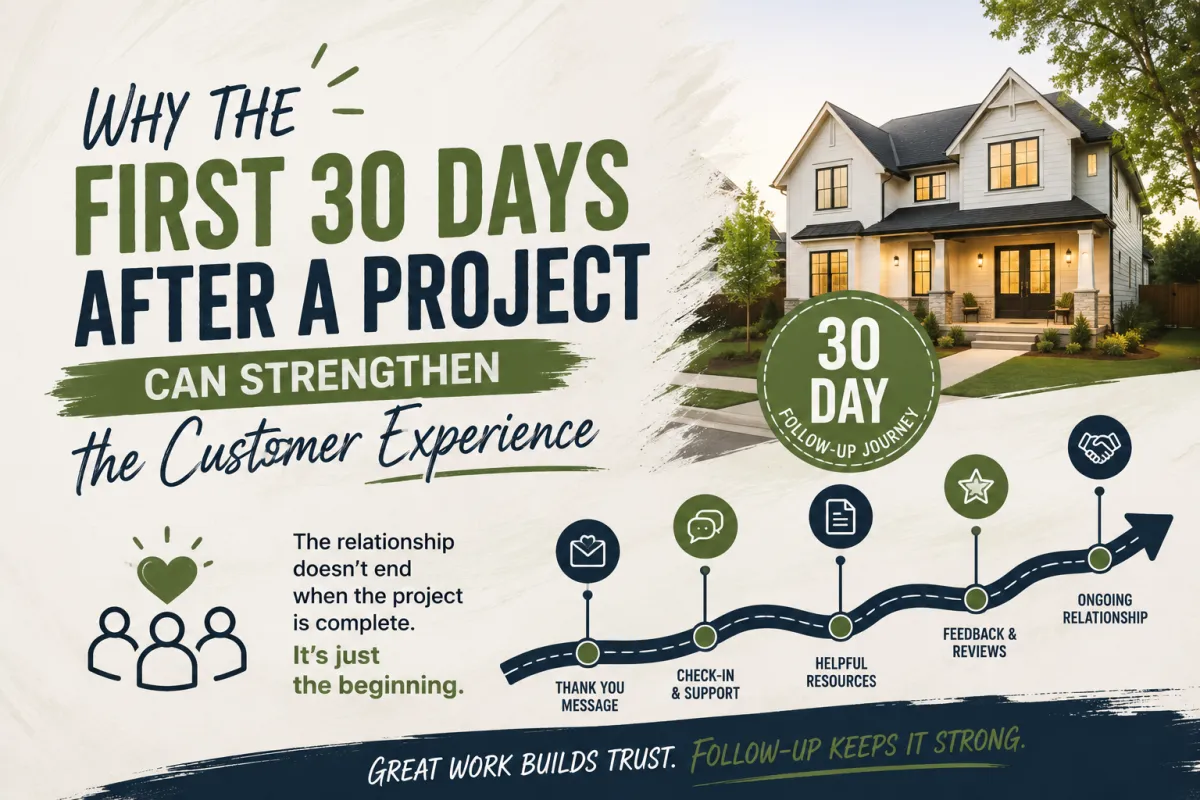
Why the First 30 Days After a Project Can Strengthen the Customer Experience
Why the First 30 Days After a Project Can Strengthen the Customer Experience
Completing a project is an important milestone in the customer journey, but it doesn't have to be the final interaction between a business and its customer.
The period immediately after a project is completed provides an opportunity to continue supporting customers through thoughtful communication, helpful resources, and ongoing service.
Depending on the type of business and the services provided, post-project communication may include:
Thank-you messages
Follow-up conversations
Maintenance information
Educational resources
Requests for feedback or reviews
Customer appreciation initiatives
Not every customer will engage with follow-up communication, and not every interaction will lead to future business.
However, continuing to provide relevant value after a project can help reinforce a positive customer experience and strengthen customer relationships over time.
Rather than viewing project completion as the end of the customer journey, businesses can consider it the beginning of a long-term relationship.
Use Our ROI Calculator
Estimate how improving your customer experience and strengthening long-term customer relationships can impact your business growth.
Why the First 30 Days Are Important
The weeks following a completed project are often when customers are becoming familiar with the finished work and reflecting on their overall experience.
During this time, they may:
Ask follow-up questions
Become familiar with maintenance requirements
Share photos with friends or family
Leave feedback if they choose
Recommend a business when appropriate
Reach out with additional questions
Every customer is different, and not everyone will take these actions.
However, remaining available and providing helpful communication during this period demonstrates continued support after the project is complete.
Examples of valuable post-project communication include:
Thank-you messages
Helpful maintenance guidance
Educational resources
Opportunities to provide feedback
Follow-up to answer questions
These interactions contribute to the overall customer experience and reinforce the relationship beyond the completed project.
Action Step: Review your most recent completed projects. Consider what communication customers currently receive during the first 30 days and whether there are opportunities to provide additional value.
Why Post-Project Communication Matters
The customer experience doesn't end when work is completed.
For many businesses, ongoing communication helps customers feel supported after the project and provides opportunities to answer questions or share helpful information.
Relevant post-project communication may include:
Maintenance reminders
Educational articles
Customer appreciation messages
Warranty information
Seasonal tips
Requests for customer feedback
The purpose of this communication should be to continue providing value rather than simply promoting additional services.
Thoughtful follow-up helps reinforce the overall customer experience and demonstrates an ongoing commitment to customer support.
Why a Structured Follow-Up Process Matters
A consistent follow-up process helps businesses continue supporting customers after a project is completed.
Rather than ending communication with the final invoice, businesses can use this period to answer questions, provide helpful information, and reinforce the overall customer experience.
Depending on the business and the services provided, a follow-up process may include:
Thank-you messages
Customer satisfaction check-ins
Maintenance guidance
Educational resources
Requests for customer feedback or reviews
Warranty information
Customer appreciation initiatives
Not every customer will respond to these communications, and not every interaction will lead to additional business.
However, providing timely, relevant communication demonstrates continued support and helps maintain a positive customer relationship.
Key Takeaway: A structured follow-up process helps create a more consistent customer experience by continuing to provide value after the project is complete.
Common Questions About Post-Project Communication
Businesses often ask how long they should continue communicating with customers after a project.
Here are a few common questions.
"Should businesses follow up after every completed project?"
The appropriate follow-up process depends on the business, the services provided, and customer expectations.
For many businesses, a brief follow-up after project completion provides an opportunity to answer questions, confirm customer satisfaction, and share helpful information.
"When is the best time to request customer feedback or reviews?"
There isn't a single timeline that applies to every business.
Many organizations choose to request feedback after customers have had enough time to experience the completed work.
The timing should be appropriate for the type of service provided and should make it easy for customers to respond if they choose.
"What should businesses include in post-project communication?"
Helpful follow-up communication may include:
Thank-you messages
Maintenance information
Educational resources
Warranty details
Seasonal reminders
Opportunities to provide feedback
The focus should remain on providing value rather than sending promotional messages.
"How can businesses evaluate their follow-up process?"
Businesses can periodically review their customer journey by asking questions such as:
Are customers receiving consistent communication?
Are follow-up messages helpful and relevant?
Is it easy for customers to ask questions?
Are there opportunities to improve the overall customer experience?
Regular reviews help identify areas where communication and customer support can be strengthened.
Common Considerations for Post-Project Communication
Many businesses recognize the importance of following up with customers after a project is completed.
As businesses grow, maintaining a consistent follow-up process across every customer interaction can become more challenging.
Reviewing how customers are supported after a project can help identify opportunities to improve the overall customer experience.
Here are a few common considerations.
"We already follow up with customers."
Following up is an important part of many customer communication strategies.
Businesses may also evaluate whether those follow-up interactions continue providing value.
Examples include:
Thank-you messages
Customer satisfaction check-ins
Educational resources
Seasonal maintenance reminders
Warranty information
Opportunities to provide feedback
The objective is to provide communication that remains relevant and helpful to the customer.
"We already use a CRM."
Customer relationship management (CRM) software helps organize customer information, automate communication, and improve operational efficiency.
While these tools support customer communication, the customer experience is still influenced by how clearly expectations are communicated and how consistently customers are supported throughout their journey.
"We already request reviews."
Requesting reviews is a common practice for many businesses.
It's also helpful to evaluate whether the review process is:
Easy for customers to complete
Appropriate for the timing of the project
Respectful of the customer's time
The decision to leave a review always remains with the customer.
"We already send emails."
Email can be an effective way to stay connected with customers after a project.
The greatest value often comes from providing information that customers find useful, such as:
Maintenance guidance
Educational content
Warranty reminders
Seasonal tips
Helpful updates
Communications that focus on supporting customers often contribute to a more positive overall experience.
A Structured 30-Day Follow-Up Plan
The first month after a project provides several opportunities to continue supporting customers.
The exact timing and communication will vary depending on the type of business and the services provided.
One example of a structured follow-up plan may include the following stages.
Days 1-2: Thank the Customer
Send a thank-you message acknowledging the completion of the project and expressing appreciation for the opportunity to work together.
Days 3-7: Confirm Customer Satisfaction
Check in to ensure the customer has an opportunity to ask questions or raise any concerns after using the completed work.
Days 7-14: Invite Feedback
If appropriate for your business, invite customers to share feedback about their experience or leave a review if they choose.
Making the process simple and convenient can encourage participation.
Days 14-21: Continue Providing Value
Share resources that help customers get the most from the completed project.
Examples may include:
Maintenance tips
Seasonal guidance
Warranty information
Frequently asked questions
Days 21-30: Maintain Communication
Reach out with a brief follow-up to answer any remaining questions and remind customers that your business is available if they need future assistance.
The goal is to maintain a positive customer relationship through helpful, relevant communication.
"Post-project communication is an opportunity to continue supporting customers through helpful, relevant interactions after the work is complete."
A Thoughtful Approach to Post-Project Communication
At Building Raving Fans, we encourage businesses to view post-project communication as part of the overall customer journey.
Rather than ending communication immediately after a project is completed, businesses can evaluate where additional support or education may benefit customers.
Depending on a company's goals, this may include:
Review generation strategies
Customer appreciation programs
Long-term email communication
Educational homeowner resources
Customer gifting initiatives
QR Code Review Cards
Follow-up communication workflows
These tools and strategies are designed to help businesses create consistent customer experiences and maintain meaningful communication after project completion.
Because every business has different services, customers, and communication goals, post-project strategies should be tailored to the needs of the organization rather than following a single standard approach.
Why Ongoing Customer Relationships Matter
Project completion represents one milestone in the customer journey.
Depending on the business and the services provided, customers may continue interacting with a company through future questions, maintenance needs, warranty support, or additional services.
Providing ongoing communication when it is relevant and helpful can reinforce the overall customer experience and demonstrate continued customer support.
While post-project communication is only one factor that influences customer satisfaction, it contributes to a more complete customer journey and provides opportunities to continue delivering value after the work is complete.
Your 7-Day Post-Project Communication Review
Improving the customer experience after a project is completed doesn't require a complete redesign of your processes.
Small, consistent improvements can help create a more thoughtful and organized customer journey.
Use this seven-day review as a starting point.
Day 1: Review Your Current Follow-Up Process
Document every communication customers receive during the first 30 days after a project is completed.
Look for opportunities to improve clarity, timing, and consistency.
Day 2: Identify Communication Gaps
Review your customer journey and identify any points where customers may benefit from additional information or support.
Examples might include:
Project completion
Warranty information
Maintenance guidance
Frequently asked questions
Day 3: Create a Thank-You Process
Develop a consistent process for thanking customers after project completion.
The message can be simple, genuine, and appropriate for your business.
Day 4: Review Your Feedback Process
Evaluate how customers are invited to share feedback or leave a review.
Ask yourself:
Is the request easy to complete?
Is the timing appropriate?
Does it reflect appreciation for the customer's business?
Day 5: Provide Helpful Resources
Identify one educational resource that customers may find valuable after the project.
Examples include:
Maintenance guides
Seasonal checklists
Warranty information
Frequently asked questions
Providing relevant information helps continue supporting customers after the project is complete.
Day 6: Evaluate Your Customer Journey
Walk through the post-project experience from the customer's perspective.
Consider whether the communication:
Is clear
Answers common questions
Supports customers after project completion
Reflects the experience your business wants to provide
Day 7: Choose One Improvement
Select one opportunity identified during the week and incorporate it into your standard customer communication process.
Customer experience benefits from continuous evaluation and improvement over time.
Action Summary
As you review your post-project communication, consider these questions:
✔ Are customers receiving consistent communication after project completion?
✔ Are we providing helpful information rather than only promotional messages?
✔ Is it easy for customers to ask questions or provide feedback?
✔ Does our follow-up process reflect the level of service we want customers to associate with our business?
✔ Are we creating a consistent experience across every completed project?
Reviewing these questions regularly can help identify opportunities to strengthen the overall customer journey.
The Bottom Line
The customer experience doesn't end when a project is completed.
For many businesses, the weeks that follow provide opportunities to continue supporting customers through helpful communication, educational resources, and ongoing service.
Every customer is different, and not every follow-up interaction will result in a review, referral, repeat business, or future project.
However, maintaining relevant communication after project completion can reinforce a positive customer experience and strengthen customer relationships over time.
Rather than viewing project completion as the final step, businesses can evaluate how post-project communication fits into the broader customer journey.
Thoughtful follow-up is one way to continue providing value long after the work has been completed.
Ready to Strengthen Your Post-Project Customer Experience?
If you're looking to improve how customers experience your business after a project is completed, reviewing your post-project communication process is an excellent place to begin.
At Building Raving Fans, we help contractors evaluate their customer journey, strengthen post-project communication, and develop relationship marketing strategies that support consistent customer experiences.
During a Building Raving Fans Strategy Call, we'll review your current customer journey, discuss your follow-up process, and identify practical opportunities to improve communication after project completion.
Whether you're refining an existing process or creating a structured follow-up strategy for the first time, our goal is to help you build systems that support meaningful customer interactions and align with your business objectives.


