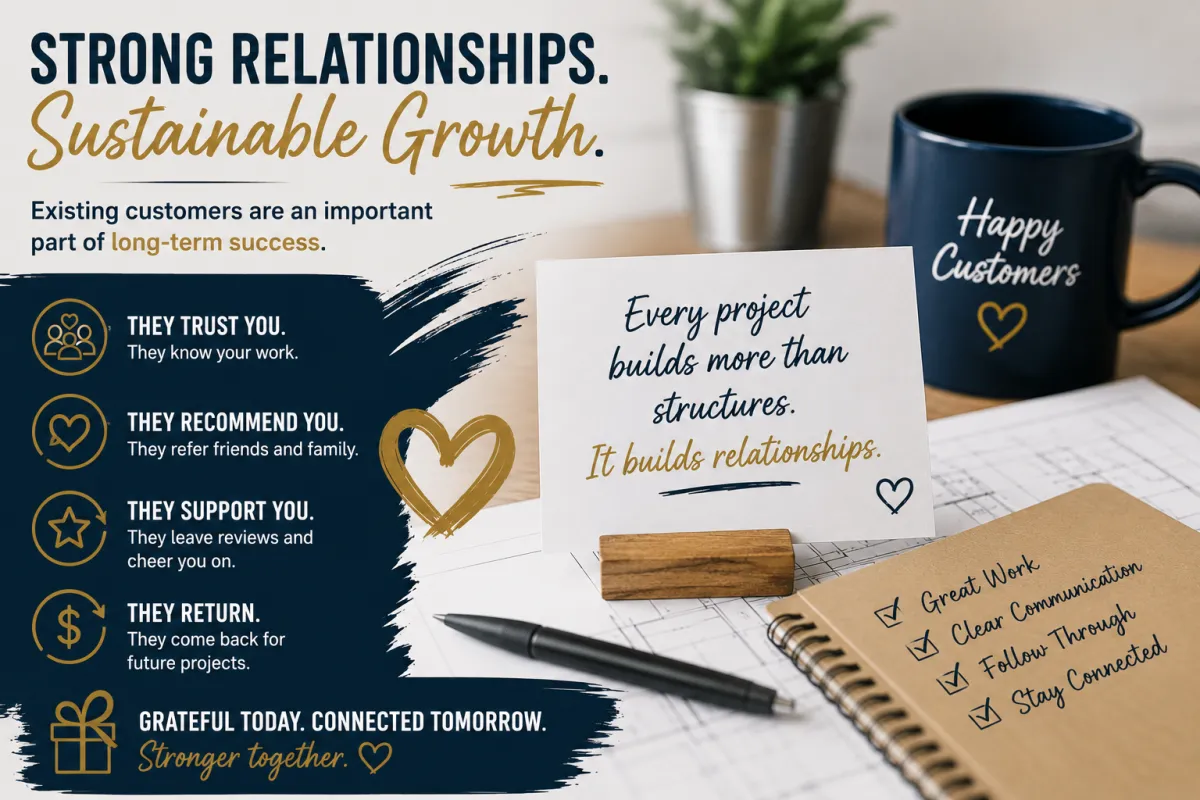
Why Existing Customers Are an Important Part of Long-Term Business Growth
Why Existing Customers Are an Important Part of Long-Term Business Growth
For many businesses, marketing efforts naturally focus on attracting new customers.
Advertising campaigns, search engine optimization (SEO), social media, referrals, and other lead generation activities all play an important role in creating new business opportunities.
At the same time, existing customers are another valuable part of a company's long-term growth strategy.
Customers who have already experienced your products or services are familiar with your business. Depending on their experience and future needs, they may choose to work with you again, recommend your business to others, leave online reviews, or engage with your educational content.
Not every customer will create additional business opportunities, and not every industry experiences the same level of repeat business.
However, maintaining positive relationships with existing customers can help businesses remain top of mind when future opportunities arise.
Rather than viewing customer relationships as ending when a project is complete, many businesses continue providing value through ongoing communication, educational resources, and customer appreciation initiatives.
A balanced marketing strategy considers both customer acquisition and customer retention.
New customers help businesses grow.
Strong customer relationships help businesses continue building on the trust they've already earned.
Free Resource: Discover the potential financial impact of stronger customer relationships with our ROI Calculator. Estimate how improving customer retention, referrals, and repeat business can help grow your business over time.
Why Businesses Often Focus More on New Customers
It's easy to understand why many businesses devote significant attention to generating new leads.
New inquiries represent immediate opportunities.
Sales teams schedule consultations.
Estimates are prepared.
Projects begin moving forward.
These activities are visible, measurable, and often reflected quickly in business reports.
Customer retention, on the other hand, tends to develop over a longer period.
It may involve:
Staying in touch after a project is complete
Providing educational resources
Sending maintenance reminders
Inviting customers to leave reviews
Expressing appreciation
Sharing relevant updates
These activities don't always produce immediate results, which can make them more difficult to measure.
However, they contribute to the overall customer experience and help businesses maintain relationships over time.
Rather than treating acquisition and retention as competing priorities, many successful organizations invest in both.
Acquiring new customers creates growth opportunities.
Retaining existing customers helps businesses continue building trust with the people they've already served.
Action Step: Review your current marketing efforts. Consider how much time and attention is devoted to acquiring new customers compared with maintaining relationships with existing ones.
Why Existing Customer Relationships Continue Creating Value
The completion of a project doesn't necessarily represent the end of a customer relationship.
Depending on the type of business and the customer's future needs, there may be opportunities to continue providing value through helpful communication and ongoing engagement.
For example, businesses may choose to share:
Educational resources
Seasonal maintenance reminders
Company updates
Customer appreciation initiatives
Review requests
Helpful tips related to previous services
Not every customer will engage with every communication.
Likewise, not every customer will become a repeat customer or refer someone else.
However, remaining helpful and relevant can make it easier for customers to remember your business when future opportunities arise.
Rather than focusing only on the next sale, businesses can also consider how to strengthen the relationships they've already established.
This long-term perspective supports a customer experience that extends beyond a single transaction.
The Value of Staying Connected With Existing Customers
Customer retention isn't about choosing existing customers instead of new ones.
It's about recognizing that both contribute to long-term business growth.
Businesses invest significant time and resources in earning a customer's trust during the buying process. Once a project is complete, maintaining that relationship through thoughtful communication can help businesses continue providing value over time.
Depending on the business and the services offered, staying connected with customers may create opportunities to:
Share educational resources
Provide seasonal maintenance reminders
Invite customers to leave reviews
Inform customers about relevant services
Encourage referrals when appropriate
Strengthen long-term customer relationships
Not every customer will respond to every communication, and not every interaction will lead to additional business.
However, continuing to communicate in ways that are helpful and relevant allows businesses to remain connected with customers beyond the initial project.
The goal isn't simply to stay visible.
It's to continue providing value.
Key Takeaway: Building customer relationships doesn't end when a project is complete. Ongoing communication helps businesses continue serving customers in meaningful ways.
Customer Acquisition and Customer Retention Work Together
Customer acquisition and customer retention are sometimes viewed as competing priorities.
In reality, both play important roles in a healthy marketing strategy.
Customer Acquisition Customer Retention Introduces new customers to your business Strengthens relationships with existing customers Focuses on generating new opportunities Focuses on maintaining ongoing engagement Helps expand your customer base Helps build long-term customer loyalty and trust Often includes advertising, SEO, referrals, and networking Often includes follow-up communication, educational content, and customer appreciation
Neither strategy replaces the other.
Businesses need new customers to grow.
At the same time, maintaining positive relationships with existing customers helps businesses continue building on the trust they've already earned.
A balanced approach recognizes that attracting new customers and serving existing ones are both essential parts of long-term growth.
Why Trust Matters After the Project Is Complete
Trust doesn't end when a customer signs a contract or completes a project.
It develops through every interaction a customer has with your business.
For many companies, communication after the project is complete may include:
Follow-up messages
Educational homeowner resources
Maintenance reminders
Customer appreciation initiatives
Requests for feedback or reviews
Updates that are relevant to the customer's needs
These interactions demonstrate that the relationship extends beyond the transaction.
Not every customer will need another service immediately.
However, customers who have a positive experience are more likely to remember businesses that continue communicating in helpful and respectful ways.
Remaining connected isn't about sending more emails.
It's about sending communication that customers genuinely find useful.
Action Step: Review your customer communication over the past year. Ask yourself:
Are we providing value after the project is complete?
Does our communication educate or simply promote?
Are we making it easy for customers to stay connected with us?
Common Questions About Customer Retention
Businesses often ask how customer retention fits into their overall marketing strategy.
Here are a few common questions.
"Should we focus on customer retention instead of lead generation?"
No.
Both are important.
Lead generation helps businesses reach new customers, while customer retention helps strengthen relationships with the customers they've already served.
A balanced marketing strategy includes both.
"Will every satisfied customer become a repeat customer?"
Not necessarily.
The likelihood of repeat business depends on many factors, including the services provided, customer needs, and timing.
However, satisfied customers may continue creating value through referrals, reviews, or recommendations, even if they don't purchase another service.
"How often should we communicate with previous customers?"
There isn't a universal schedule.
Instead of communicating frequently for the sake of staying visible, focus on sharing information that customers are likely to find helpful and relevant.
Quality is generally more important than quantity.
"What kinds of communication provide the most value?"
That depends on your business and your customers.
Examples may include:
Educational resources
Seasonal reminders
Maintenance guidance
Customer appreciation messages
Company updates
Requests for reviews or feedback
The most effective communication is timely, relevant, and genuinely useful to the customer.
Common Challenges in Customer Retention
Many businesses recognize the importance of maintaining customer relationships, but they aren't always sure how to do it consistently.
Here are a few common situations businesses encounter.
"We already have a customer database."
A customer database is an important starting point.
However, simply storing customer information doesn't create ongoing engagement.
Regular, thoughtful communication helps businesses continue providing value after a project is complete.
"We already send newsletters."
Newsletters can be an effective communication tool when they provide information customers find useful.
If every email focuses only on promotions, customers may become less engaged over time.
Consider including content such as:
Seasonal maintenance tips
Homeowner education
Frequently asked questions
Company updates
Helpful resources related to your services
Educational communication often provides greater long-term value than repeated promotional messages.
"We already follow up after the project."
Following up after a project is an excellent practice.
Customer retention, however, is typically built through ongoing communication rather than a single interaction.
Depending on the business, this may include periodic educational emails, maintenance reminders, customer appreciation initiatives, or other touchpoints that remain relevant to the customer.
"Our CRM already automates customer communication."
Customer relationship management (CRM) software can help businesses communicate more consistently.
However, software is only one part of the process.
The effectiveness of customer communication also depends on:
The relevance of the message
The timing of the communication
The value provided to the customer
The overall customer experience
Technology supports communication.
Thoughtful communication strengthens relationships.
A Better Approach: Balance Customer Acquisition and Customer Retention
Long-term growth doesn't come from focusing exclusively on either acquiring new customers or retaining existing ones.
Both play important roles in a healthy business.
Customer acquisition introduces new opportunities.
Customer retention helps businesses continue building relationships with customers they've already served.
An effective customer communication strategy often includes both.
For example, businesses may choose to continue engaging previous customers through:
Educational newsletters
Seasonal maintenance reminders
Customer appreciation initiatives
Helpful homeowner resources
Requests for reviews or feedback
Relevant updates when appropriate
These touchpoints help businesses remain connected with customers while continuing to provide value beyond the original project.
Not every customer will respond to every communication.
The objective isn't to maximize the number of messages.
It's to ensure each interaction is useful, timely, and aligned with the customer experience your business wants to create.
Strong customer relationships are built through consistent, positive experiences over time.
How Building Raving Fans Supports Customer Retention
At Building Raving Fans, we believe customer retention begins with creating positive experiences throughout the entire customer journey.
Our approach focuses on helping contractors build communication systems that support long-term customer relationships rather than ending communication when a project is complete.
Depending on a company's goals, that may include:
Customer journey planning
Long-term email nurture
Customer appreciation programs
Review generation strategies
Referral marketing initiatives
Educational homeowner communication
Customer gifting programs
Follow-up communication workflows
These strategies are intended to help businesses maintain meaningful communication while continuing to provide value after the initial project.
Every business has different customers, services, and communication goals.
For that reason, there isn't a single customer retention strategy that fits every company.
Instead, businesses benefit from developing communication plans that reflect the experience they want customers to have before, during, and after a project.
The goal isn't simply to stay in touch.
It's to remain helpful, relevant, and memorable.
A Long-Term Perspective
Customer relationships don't end when a project is completed.
They continue through the experiences customers have with your business over time.
When communication remains relevant and customer-focused, businesses create additional opportunities to:
Provide ongoing value
Reinforce trust
Encourage customer feedback
Stay connected with previous customers
Support future engagement when appropriate
Customer retention isn't about replacing lead generation.
It's about recognizing that existing customer relationships are an important part of a well-rounded growth strategy.
Key Insight: A balanced marketing strategy invests in both attracting new customers and maintaining positive relationships with existing ones.
Pull Quote
"A completed project may end the work, but continuing to provide value can help strengthen the customer relationship over time."
Your 7-Day Existing Customer Relationship Plan
Strengthening relationships with existing customers doesn't require major changes all at once.
Small, consistent improvements can help businesses continue providing value long after a project is complete.
Use this seven-day plan as a starting point.
Day 1: Review Your Customer Database
Take inventory of your existing customer records.
Ask yourself:
Is the information current?
Can customers be grouped by service or project type?
Are there opportunities to communicate more effectively with different customer segments?
A well-organized customer database provides the foundation for meaningful communication.
Day 2: Evaluate Your Follow-Up Process
Review what happens after a project is completed.
Consider questions such as:
Do customers receive a follow-up message?
Is there an opportunity to share helpful resources?
Are customers invited to provide feedback or leave a review?
Looking at your follow-up process from the customer's perspective can help identify opportunities to improve the overall experience.
Day 3: Share Something Helpful
Create one piece of educational content that customers may find valuable.
Examples include:
Seasonal maintenance reminders
Homeowner care guides
Frequently asked questions
Safety recommendations
Product care instructions
Educational communication helps businesses continue serving customers after the initial project.
Day 4: Recognize Your Customers
Identify one way your business can express appreciation.
Depending on your business, that might include:
A handwritten thank-you note
A personalized email
A customer appreciation initiative
A follow-up phone call
The objective is to acknowledge the relationship—not simply complete the transaction.
Day 5: Review Your Customer Feedback Process
Evaluate how customers are invited to share their experience.
Ask yourself:
Is the review process simple?
Are requests made at an appropriate time?
Do customers understand why feedback is valuable?
Making it easy for customers to provide feedback benefits both the business and future customers.
Day 6: Plan Ongoing Customer Communication
Develop a simple communication plan for previous customers.
Rather than communicating only when promoting a service, consider sharing information customers may genuinely appreciate, such as:
Seasonal tips
Educational articles
Company updates
Maintenance reminders
Community involvement
The goal is to remain helpful—not simply visible.
Day 7: Review Your Overall Customer Journey
Take one final look at the customer experience and ask:
"Are we continuing to provide value after the project is complete?"
This question encourages businesses to think beyond individual transactions and focus on building lasting customer relationships.
Action Summary
As you evaluate your customer communication strategy, consider these questions:
✔ Are we balancing customer acquisition with customer retention?
✔ Are we providing meaningful communication after the project is complete?
✔ Is our communication educational, helpful, and relevant?
✔ Have we made it easy for customers to provide feedback or leave reviews?
✔ Does every customer interaction contribute to a positive overall experience?
These questions can help identify opportunities to strengthen customer relationships over time.
The Bottom Line
Attracting new customers is an important part of growing any business.
Maintaining relationships with existing customers is another important part of that process.
Customers who have had a positive experience with your business may continue engaging with your company in different ways over time, such as leaving reviews, recommending your services, returning for future work when appropriate, or sharing their experiences with others.
Not every customer will create the same opportunities, and every business will have different goals and customer behaviors.
For that reason, customer retention is best viewed as an ongoing commitment to delivering value rather than a guaranteed source of future revenue.
Businesses that consistently provide excellent service, communicate thoughtfully, and continue supporting customers after a project is complete are better positioned to build lasting relationships.
Strong relationships aren't created through a single interaction.
They're built through a series of positive experiences over time.
Ready to Strengthen Relationships With Your Existing Customers?
If you're looking to improve your customer experience, strengthening relationships with existing customers can be an important part of your overall marketing strategy.
At Building Raving Fans, we help contractors evaluate their customer journey, identify opportunities to improve customer communication, and develop relationship marketing strategies that support long-term customer engagement.
During a Building Raving Fans Strategy Call, we'll review your current customer experience, discuss your communication process, and explore practical ways to strengthen relationships throughout the customer journey.
Whether you're creating a customer retention strategy for the first time or refining an existing one, our goal is to help you build communication systems that continue providing value long after a project is complete.
The relationships you build with your customers don't have to end when the work is finished. Thoughtful, consistent communication can help you continue serving them well into the future.


