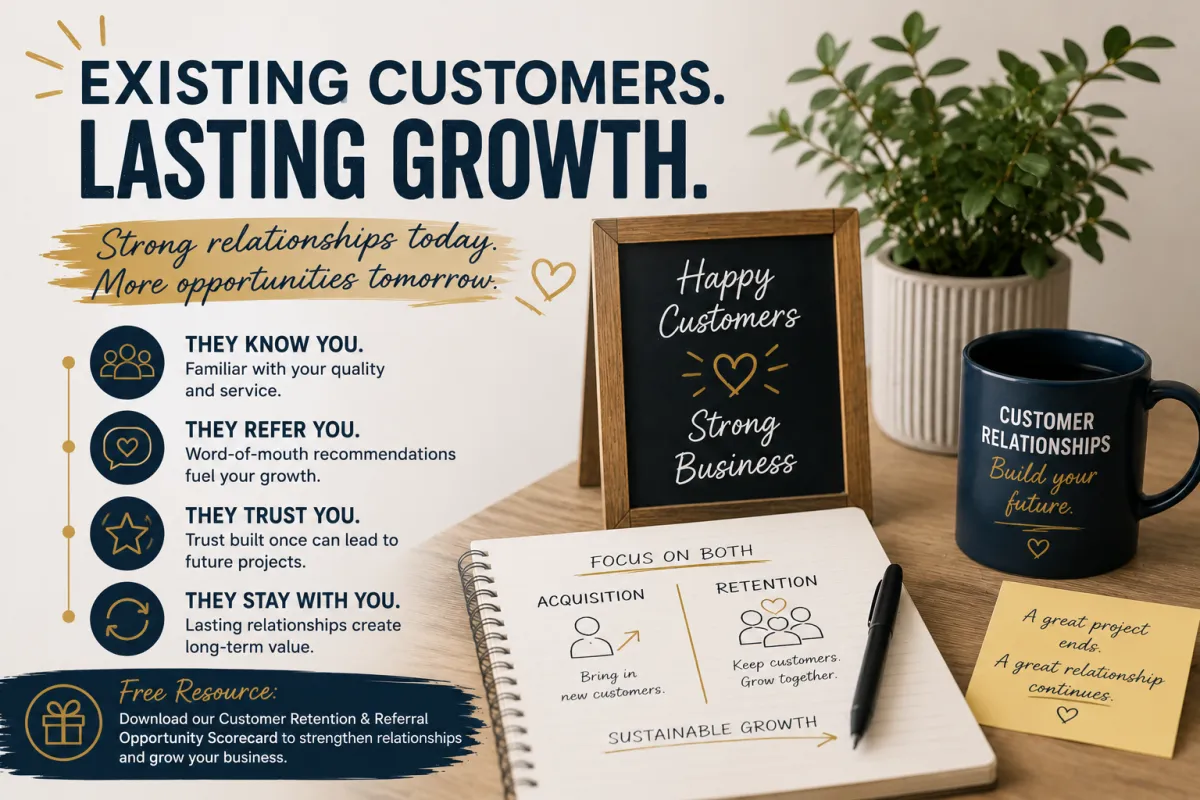
Why Customer Experience Plays an Important Role in Referrals
Why Customer Experience Plays an Important Role in Referrals
Many businesses invest time and resources into creating referral programs.
These programs may include referral rewards, thank-you gifts, referral cards, discounts, or other incentives designed to encourage customers to recommend the business to others.
While referral programs can support customer advocacy, they are only one part of the overall referral process.
Customers typically recommend businesses because they had a positive experience and feel confident sharing that experience with others.
That experience often extends beyond the quality of the finished work.
It may include:
Clear communication
Professionalism
Reliability
Responsiveness
Problem resolution
Follow-up after the project
Overall customer service
Every customer is different, and there isn't a single reason why people choose to recommend a business.
Some customers may refer others because of exceptional service.
Others may appreciate how issues were handled.
Some may simply enjoy sharing businesses they trust with friends, family, or neighbors.
Rather than viewing referrals as something that begins with an incentive, it's helpful to think of referrals as the result of positive customer experiences built over time.
Referral programs can make it easier for customers to act on that positive experience, but they don't replace the importance of creating an experience customers genuinely value.
Free Resource: Discover the potential financial impact of stronger customer relationships with our ROI Calculator. Estimate how improving customer retention, referrals, and repeat business can support long-term business growth.
Why Referral Programs Alone May Not Be Enough
When referrals slow down, businesses often look first at the referral program itself.
They may consider:
Increasing referral incentives
Updating referral materials
Sending additional reminder emails
Promoting the referral program more frequently
These ideas can all be worthwhile depending on the business and its goals.
However, it's also valuable to evaluate the customer experience that comes before the referral request.
A referral is typically the final step in a much longer customer journey.
Before recommending a business, customers often consider questions such as:
Was the experience positive?
Did the business communicate clearly?
Would I feel comfortable recommending them to someone I know?
Would I use this business again if I needed similar services?
The answers to these questions are shaped by the customer's overall experience not by the referral request alone.
For that reason, businesses often benefit from reviewing both their referral program and the customer journey that supports it.
Action Step: Think about recent referrals your business has received. Consider what aspects of the customer experience may have influenced those recommendations, beyond the referral program itself.
Understanding the Referral Journey
Referrals are often viewed as a single event:
A customer is asked for a referral.
The customer provides one.
In reality, the process is usually more gradual.
A referral is often influenced by multiple interactions throughout the customer journey.
One way to think about that journey is:
Positive Customer Experience
↓
Confidence in the Business
↓
Trust
↓
Willingness to Recommend
↓
Referral Opportunity
Every interaction contributes to the customer's overall impression of the business.
These interactions may include:
Initial inquiries
Estimates and consultations
Project communication
Completion of the work
Follow-up communication
Customer appreciation
Ongoing educational resources
Not every positive customer experience will result in a referral.
Likewise, not every referral comes from a formal referral program.
However, consistently positive experiences create more opportunities for customers to recommend a business when appropriate.
Customer Experience Influences Referrals
A referral is often the result of a customer's overall experience with a business.
While the quality of the completed work is important, customers also remember how they were treated throughout the process.
Their experience may be shaped by factors such as:
Clear communication
Responsiveness
Professionalism
Reliability
Respect for their time and property
Follow-up after the project
How questions or concerns were handled
Each interaction contributes to the customer's overall impression of the business.
Not every satisfied customer will leave a review or recommend a company, and there are many reasons why customers choose to make referrals.
However, a positive and consistent customer experience can help build the trust and confidence that often encourage customers to share their experience with others.
Rather than viewing referrals as a single request at the end of a project, businesses can think of them as one possible outcome of delivering a positive customer experience from beginning to end.
Key Takeaway: Referral requests are important, but they are most effective when they build on a positive customer experience.
Customer Experience and Referral Programs Work Together
Customer experience and referral programs serve different purposes.
Customer Experience Referral Program Shapes how customers feel about your business Provides a structured way for customers to refer others Focuses on every interaction throughout the customer journey Focuses on making referrals simple and accessible Builds trust over time Encourages customers to act on that trust Continues before, during, and after a project Usually comes after a positive customer experience
A referral program doesn't replace a positive customer experience.
Likewise, a positive customer experience doesn't eliminate the need to make referrals easy.
Businesses often benefit from considering both as complementary parts of their overall customer strategy.
Why Satisfied Customers Don't Always Make Referrals
It's common to assume that satisfied customers will naturally recommend a business.
In reality, customer satisfaction and customer advocacy are not always the same.
A customer may be satisfied with the work completed but never have an opportunity to recommend the business.
Others may have an excellent experience but simply not know anyone currently looking for similar services.
Some customers actively share businesses they trust, while others rarely make referrals regardless of how positive their experience was.
For these reasons, businesses should avoid measuring customer satisfaction solely by the number of referrals they receive.
Instead, it's helpful to evaluate the overall customer experience and make it easy for customers to provide feedback, leave reviews, or recommend the business when appropriate.
Action Step: Review your customer journey and identify opportunities where you can make it easier for customers to share feedback or recommend your business if they choose to do so.
Common Questions About Referral Programs
Businesses often ask how referral programs fit into their broader customer experience strategy.
Here are a few common questions.
"Should we offer referral incentives?"
Referral incentives can encourage participation in a referral program.
Whether they are appropriate depends on your business, your industry, and your overall marketing strategy.
The incentive itself is only one part of the referral process.
Customers are more likely to recommend businesses they trust and feel confident recommending to others.
"When is the best time to ask for a referral?"
There isn't a single answer that applies to every business.
Many organizations choose to ask after a customer has had sufficient time to experience the service and feels comfortable sharing feedback.
The timing should feel natural within the overall customer journey.
"Does excellent work automatically generate referrals?"
Not necessarily.
High-quality work is an important foundation, but referrals may also be influenced by customer relationships, communication, timing, and whether customers have opportunities to recommend your business.
"What helps create a referral-worthy customer experience?"
Every business is different, but customer experiences are often strengthened by:
Clear communication
Professionalism
Reliability
Responsiveness
Appreciation
Helpful follow-up
Respectful service throughout the customer journey
These elements contribute to a positive experience, which may encourage customers to recommend the business when appropriate.
Common Challenges in Building Referral-Worthy Experiences
Many businesses recognize the importance of referrals but aren't always sure where to focus their efforts.
Here are a few common questions businesses consider when evaluating their customer experience.
"We already ask customers for referrals."
Asking for referrals is an important part of many referral programs.
However, a referral request is generally most effective when it follows a positive customer experience.
Customers are more likely to feel comfortable recommending a business when they have confidence in the quality of the service they received and the overall experience throughout the customer journey.
"We already offer referral incentives."
Referral incentives can encourage participation, but they are only one part of a referral strategy.
Customers choose to recommend businesses for many different reasons, including positive service experiences, trust, convenience, and confidence in the company's ability to help others.
An incentive may support a referral program, but it doesn't replace the importance of delivering a positive customer experience.
"We already follow up after every project."
Following up after a project is a valuable practice.
Businesses may also benefit from considering how they continue providing value after that initial follow-up.
Examples include:
Educational resources
Maintenance reminders
Customer appreciation initiatives
Relevant company updates
Opportunities to provide feedback
The objective is to maintain meaningful communication rather than contacting customers only when requesting referrals.
"We already send thank-you emails."
Expressing appreciation is an important part of the customer experience.
Whether it's done through email, handwritten notes, phone calls, or other forms of communication, the most meaningful appreciation is timely, genuine, and relevant to the customer.
Different businesses will choose different approaches based on their customers and communication style.
A Better Approach: Build Referral Opportunities Through Customer Experience
Referral programs are one component of a broader customer relationship strategy.
Rather than focusing exclusively on referral requests, businesses can also consider the experiences that lead customers to feel confident recommending them.
Examples of relationship-building activities may include:
Clear and consistent communication
Timely project updates
Educational resources
Customer appreciation initiatives
Requests for feedback or reviews
Helpful follow-up after the project
These touchpoints contribute to the overall customer experience and help reinforce trust throughout the customer journey.
Not every positive experience will result in a referral, and not every referral comes from a formal referral program.
However, businesses that consistently provide positive customer experiences create more opportunities for customers to recommend them when appropriate.
A referral request should feel like a natural extension of the customer relationship, not the beginning of it.
How Building Raving Fans Supports Referral Marketing
At Building Raving Fans, we believe referral marketing begins with creating positive customer experiences.
Our approach focuses on helping contractors strengthen customer relationships throughout the entire customer journey rather than concentrating only on referral requests.
Depending on a company's goals, that may include:
Customer journey planning
Customer appreciation programs
Long-term email nurture
Review generation strategies
Referral marketing processes
Customer gifting programs
Follow-up communication workflows
Educational homeowner communication
These strategies are designed to help businesses create consistent customer experiences while making it easier for customers to stay engaged after a project is complete.
Every business is different, and there isn't a single referral strategy that works for everyone.
Instead, businesses benefit from developing customer experiences that reflect their values, communication style, and long-term relationship goals.
The objective isn't simply to receive more referrals.
It's to create customer experiences that people genuinely appreciate and feel comfortable recommending to others.
A Long-Term Perspective
Referrals are one way customers may choose to share a positive experience with others.
They are influenced by many factors, including customer satisfaction, trust, timing, personal relationships, and whether someone has an opportunity to make a recommendation.
Because of this, referral marketing is best viewed as part of a broader customer experience strategy rather than as a standalone initiative.
Businesses that consistently communicate well, provide quality service, and continue supporting customers after a project is complete are better positioned to build lasting relationships over time.
Key Insight: Referral programs can encourage customer recommendations, but they are most effective when supported by a positive and consistent customer experience.
"A referral program can make recommendations easier, but positive customer experiences are what give people something meaningful to recommend."
Your 7-Day Customer Experience Review Plan
Creating a positive customer experience is an ongoing process.
This seven-day plan provides a practical framework for evaluating how your business supports customers before, during, and after a project.
Day 1: Review Your Customer Journey
Map out every stage of your customer journey, from the first inquiry through project completion and follow-up.
Identify each point where customers interact with your business.
Day 2: Gather Team Feedback
Ask your team:
"Which parts of our customer experience create the greatest value for our customers?"
Encourage discussion about communication, responsiveness, professionalism, and opportunities for improvement.
Day 3: Evaluate Your Review Process
Review how customers are invited to provide feedback or leave reviews.
Consider questions such as:
Is the process easy to understand?
Are requests made at an appropriate time?
Do customers know why their feedback is valuable?
Day 4: Identify Opportunities to Show Appreciation
Consider one additional way your business can recognize customers after a project is complete.
Depending on your business, this might include:
A handwritten thank-you note
A personalized email
A customer appreciation initiative
Helpful educational resources
Small gestures can reinforce a positive customer experience.
Day 5: Review Your Referral Process
Evaluate how and when customers are invited to recommend your business.
Ask yourself:
Does the referral request fit naturally within the customer journey?
Is it easy for customers to participate if they choose?
Does the process align with the overall customer experience?
Day 6: Talk With Previous Customers
Reach out to a few previous customers and ask about their experience.
Focus on listening rather than requesting referrals.
Customer feedback can provide valuable insights into what your business is doing well and where improvements may be possible.
Day 7: Reflect on the Overall Experience
Review the entire customer journey and ask:
"Does our customer experience reflect the level of service we want customers to remember?"
This question encourages continuous improvement rather than focusing only on individual touchpoints.
Action Summary
As you review your customer experience, consider these questions:
✔ Are we providing a consistent experience throughout the customer journey?
✔ Is our communication clear, timely, and helpful?
✔ Do customers have opportunities to provide feedback or leave reviews?
✔ Does our referral process feel like a natural part of the customer experience?
✔ Are we continuing to provide value after the project is complete?
These questions can help identify opportunities to strengthen customer relationships over time.
The Bottom Line
Referral programs can be a valuable part of a broader customer relationship strategy.
They provide customers with a simple way to recommend a business when they choose to do so.
At the same time, referrals are often influenced by the overall customer experience.
The quality of the work, communication, professionalism, trust, and the customer's personal circumstances can all play a role in whether someone recommends a business.
Because every customer and every business is different, there isn't a single approach that guarantees referrals.
However, businesses that consistently focus on delivering positive customer experiences, maintaining strong communication, and making it easy for customers to share feedback or recommendations are better positioned to build lasting relationships.
Rather than viewing referrals as the goal of a single interaction, it's helpful to see them as one possible outcome of a customer experience that continues long after the project is complete.
Ready to Strengthen Your Customer Experience?
If you're looking to improve how customers experience your business, evaluating your customer journey is a great place to start.
At Building Raving Fans, we help contractors assess their customer experience, identify opportunities to improve communication, and develop relationship marketing strategies that support long-term customer engagement.
During a Building Raving Fans Strategy Call, we'll review your current customer journey, discuss your communication process, and explore practical ways to create a more consistent customer experience from the first interaction through post-project follow-up.
Whether you're refining an existing referral strategy or building one for the first time, our goal is to help you develop systems that support stronger customer relationships over time.
A positive customer experience may encourage customers to share their experience with others. Building thoughtful, consistent relationships helps create opportunities for those recommendations to happen naturally.


