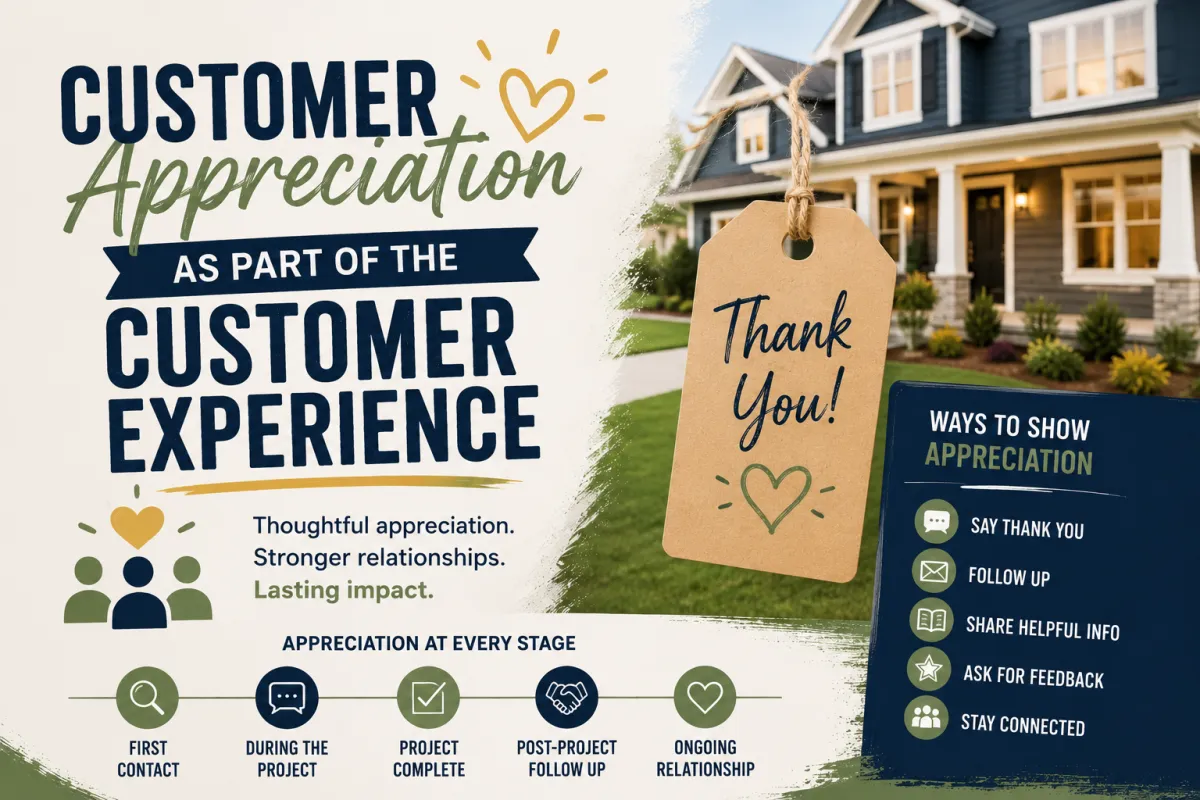
Customer Appreciation as Part of the Customer Experience
Customer Appreciation as Part of the Customer Experience
Completing a project is an important milestone, but it doesn't have to be the final interaction between a business and its customers.
Many businesses choose to continue communicating after a project by expressing appreciation, sharing helpful information, or providing ongoing support.
Customer appreciation can take many forms, including:
Thank-you messages
Follow-up communication
Educational resources
Customer appreciation initiatives
Requests for feedback or reviews
Seasonal reminders or maintenance tips
The most appropriate approach depends on the business, the services provided, and customer expectations.
Not every customer will respond to post-project communication, and appreciation alone does not guarantee referrals, reviews, or future business.
However, thoughtful appreciation can contribute to a positive customer experience and reinforce the relationship after the work is complete.
Rather than viewing appreciation as a single event, businesses can incorporate it into the broader customer journey as one way to continue providing value.
Use Our ROI Calculator
Estimate how strengthening customer relationships and creating memorable customer experiences can contribute to long-term business growth.
Why Customer Appreciation Can Strengthen the Customer Experience
Customer appreciation is one way businesses recognize and thank customers for the opportunity to work together.
Expressions of appreciation do not need to be elaborate or expensive.
Depending on the business, appreciation may include:
A thank-you message
A follow-up phone call
Helpful educational resources
Customer appreciation initiatives
Seasonal maintenance reminders
A request for customer feedback
These interactions can reinforce professionalism and demonstrate continued support after a project has been completed.
Every customer values different aspects of the experience.
Some appreciate timely communication.
Others value educational resources or ongoing support.
For that reason, appreciation should be thoughtful, relevant, and appropriate for the customer relationship.
Action Step: Review your customer journey and identify where your business currently expresses appreciation. Consider whether there are additional opportunities to provide meaningful value after a project is completed.
Customer Appreciation Is Part of an Ongoing Relationship
Customer appreciation is most effective when viewed as part of a broader customer relationship rather than a one-time gesture.
Businesses often communicate with customers at several points throughout the customer journey, including:
Initial inquiries
Project updates
Project completion
Follow-up communication
Educational support
Opportunities to provide feedback
Each interaction contributes to the overall customer experience.
Rather than focusing on a single appreciation activity, businesses can evaluate how each communication supports customers throughout their relationship with the company.
Providing consistent, relevant communication helps create a customer experience that extends beyond the completed project.
Why a Consistent Customer Appreciation Process Matters
Customer appreciation is most effective when it is part of a consistent customer experience rather than an occasional gesture.
Without a structured process, appreciation activities may vary from customer to customer depending on time, workload, or individual team members.
Developing a repeatable approach helps businesses deliver a more consistent experience while ensuring customers receive relevant communication after a project is completed.
A customer appreciation process may include:
Thank-you messages
Follow-up communication
Educational resources
Seasonal reminders
Requests for customer feedback or reviews
Customer appreciation initiatives
The exact process should reflect the needs of the business and the expectations of its customers.
Not every customer will respond to follow-up communication, and appreciation alone does not determine whether someone leaves a review, provides a referral, or returns for future services.
However, consistent appreciation can help reinforce professionalism and demonstrate an ongoing commitment to customer service.
Key Takeaway: A structured appreciation process helps create a more consistent customer experience by providing thoughtful communication after the project is complete.
Common Questions About Customer Appreciation
Businesses often ask how appreciation should fit into the customer experience.
Here are a few common considerations.
"Is a thank-you message enough?"
A sincere thank-you message is an important way to acknowledge the customer's business.
Some organizations also choose to provide additional value through educational resources, follow-up communication, or customer appreciation initiatives.
The most appropriate approach depends on the services provided and the expectations of customers.
"Do appreciation gifts need to be expensive?"
Meaningful appreciation does not necessarily depend on cost.
Thoughtful communication, timely follow-up, and relevant resources may be just as valuable as physical gifts.
Businesses should choose appreciation methods that align with their brand, customer experience, and budget.
"Should every customer receive the same appreciation experience?"
Many businesses create a standard process to help ensure consistency while still allowing flexibility to personalize communication when appropriate.
A documented process helps team members understand when and how customer appreciation should occur.
"How can businesses evaluate their appreciation process?"
Businesses can periodically review questions such as:
Is appreciation communicated consistently?
Are customers receiving helpful, relevant information?
Is follow-up timely and appropriate?
Does the appreciation process align with the overall customer experience?
Regular evaluation can help identify opportunities for improvement.
Building a Consistent Customer Appreciation Process
Customer appreciation is most effective when it is incorporated into a repeatable customer experience rather than relying on occasional gestures.
As businesses grow, documenting appreciation activities can help create a more consistent experience for customers while making it easier for team members to follow the same process.
Many businesses periodically review their customer journey by asking questions such as:
"How do we currently thank our customers?"
Consider every interaction that occurs after a project is completed.
Examples may include:
Thank-you messages
Follow-up communication
Educational resources
Customer appreciation initiatives
Warranty information
Seasonal reminders
Reviewing these touchpoints can help identify opportunities to improve consistency.
"How are we managing customer communication?"
Many businesses use customer relationship management (CRM) software to organize customer information and automate portions of their communication.
These tools can support consistency, but businesses should also evaluate whether the communication remains timely, relevant, and helpful throughout the customer journey.
"How do customers provide feedback?"
If requesting customer feedback or reviews is part of your customer experience strategy, consider whether the process is:
Easy to access
Clearly communicated
Appropriate for the timing of the project
Respectful of the customer's choice to participate
Providing a simple process allows customers to share feedback if they wish.
"Is our appreciation process documented?"
A documented process helps businesses deliver a more consistent customer experience.
Whether the process is managed through checklists, workflows, or operating procedures, documentation helps ensure appreciation activities are applied consistently across projects.
An Example Customer Appreciation Framework
Every business will have different communication needs.
The following example illustrates one way a business might structure customer appreciation after project completion.
Step 1: Acknowledge Project Completion
Thank customers for the opportunity to work together and recognize the successful completion of the project.
Step 2: Express Appreciation
Provide a thoughtful expression of appreciation that aligns with your business and customer experience.
Examples might include:
A handwritten thank-you note
A personalized email
A small appreciation gift
A follow-up phone call
The specific approach should be appropriate for your customers and business goals.
Step 3: Invite Customer Feedback
If appropriate, invite customers to share feedback about their experience or leave a review.
The invitation should make participation convenient while respecting the customer's decision.
Step 4: Continue Providing Helpful Information
Share resources that customers may find valuable after the project.
Examples include:
Maintenance tips
Seasonal reminders
Warranty guidance
Frequently asked questions
Educational articles
Providing ongoing value helps extend the customer experience beyond project completion.
Step 5: Maintain Appropriate Communication
Depending on the nature of the business, periodic communication can help customers stay informed about relevant resources, seasonal recommendations, or future services.
The focus should remain on providing helpful information rather than frequent promotional messaging.
"Customer appreciation is one way businesses can continue providing value and strengthen the overall customer experience after a project is completed."
A Thoughtful Approach to Customer Appreciation
At Building Raving Fans, we encourage businesses to evaluate customer appreciation as one part of a broader customer experience strategy.
Depending on a company's goals and customer journey, appreciation efforts may include:
Customer appreciation programs
Review generation strategies
Follow-up communication
Educational resources
Customer gifting initiatives
Long-term email communication
NFC Review Cards
These tools and strategies can help businesses create a more consistent customer experience while maintaining meaningful communication after project completion.
Because every business is different, customer appreciation strategies should be adapted to fit the organization's services, customers, and communication goals.
Why Customer Appreciation Supports the Customer Experience
Customer appreciation is one of many ways businesses can continue engaging with customers after a project has been completed.
Depending on the business and the services provided, post-project communication may include answering questions, sharing educational resources, providing maintenance information, or expressing appreciation for the customer's business.
While customer appreciation alone does not determine whether someone leaves a review, provides a referral, or becomes a repeat customer, it can contribute to a positive customer experience and reinforce ongoing communication.
Businesses that periodically evaluate and refine their customer appreciation process are often better positioned to provide a consistent experience across every completed project.
Your 7-Day Customer Appreciation Review
Creating a thoughtful customer appreciation process doesn't require a complete overhaul of your operations.
Small, intentional improvements can help create a more consistent customer experience over time.
Use this seven-day review to evaluate your current approach.
Day 1: Review Your Customer Journey
List every interaction customers receive after a project is completed.
Identify where appreciation, education, or follow-up communication already exists.
Day 2: Identify Opportunities for Appreciation
Review your customer journey and determine where an additional thank-you, follow-up message, or helpful resource may add value.
Day 3: Create a Standard Thank-You Process
Develop a consistent way to thank customers after project completion.
Whether it's a handwritten note, email, or phone call, choose an approach that reflects your business and customer experience.
Day 4: Review Your Feedback Process
Evaluate how customers are invited to provide feedback or leave a review.
Consider whether the process is:
Easy to access
Clearly communicated
Appropriate for the timing
Respectful of the customer's choice to participate
Day 5: Develop Helpful Customer Resources
Identify one resource customers may find valuable after project completion.
Examples include:
Maintenance guides
Seasonal checklists
Warranty information
Frequently asked questions
Educational articles
Providing useful information helps extend the customer experience beyond the completed project.
Day 6: Evaluate Ongoing Communication
Review how your business stays connected with customers after the initial follow-up.
Ensure communication remains relevant, helpful, and aligned with customer expectations.
Day 7: Document Your Process
Create a repeatable checklist or workflow so customer appreciation activities can be delivered consistently across projects.
Review and refine the process periodically as your business evolves.
Action Summary
As you evaluate your customer appreciation process, consider these questions:
✔ Do customers consistently receive a thank-you after project completion?
✔ Are we providing helpful information after the project is finished?
✔ Is it easy for customers to ask questions or provide feedback?
✔ Does our appreciation process reflect the experience we want customers to have?
✔ Have we documented our process so it can be delivered consistently?
Reviewing these questions regularly can help identify opportunities to improve the overall customer experience.
The Bottom Line
Customer appreciation is one component of a broader customer experience strategy.
Expressing appreciation, providing helpful resources, and maintaining appropriate communication after a project can reinforce the relationship between a business and its customers.
Every customer is different, and appreciation alone does not determine whether someone leaves a review, refers others, or returns for future services.
However, incorporating appreciation into the customer journey can help businesses create a more thoughtful and consistent experience while continuing to provide value after the project is complete.
Regularly evaluating and refining your customer appreciation process is one way to support long-term customer relationships and continuous improvement.
Ready to Strengthen Your Customer Appreciation Process?
If you're looking to create a more consistent customer experience after project completion, reviewing your customer appreciation process is a practical place to start.
At Building Raving Fans, we help contractors evaluate their customer journey, develop customer appreciation strategies, and improve post-project communication that aligns with their business goals.
During a Building Raving Fans Strategy Call, we'll review your current customer experience, discuss your appreciation process, and identify practical opportunities to strengthen communication, follow-up, and long-term customer engagement.
Whether you're refining an existing process or creating one for the first time, our goal is to provide practical guidance that helps you build a more consistent customer experience.


