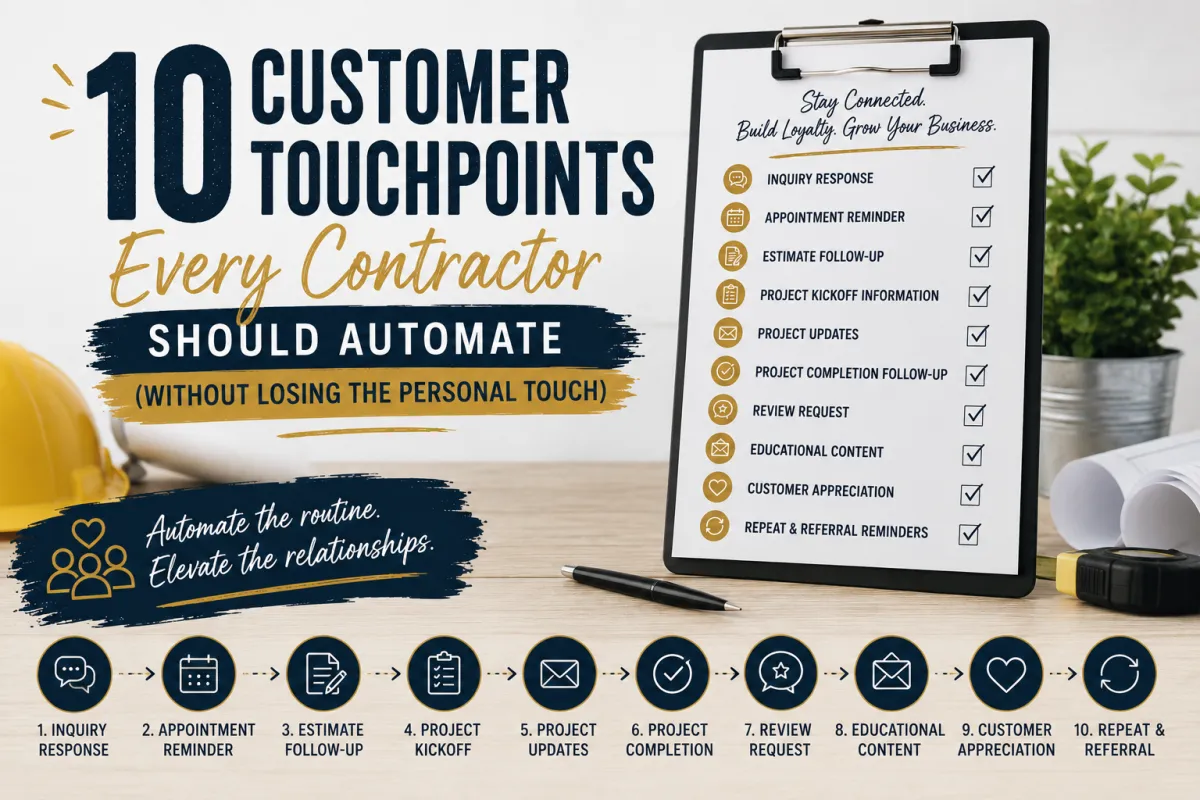
10 Customer Touchpoints Every Contractor Should Automate
10 Customer Touchpoints Every Contractor Should Automate (Without Losing the Personal Touch)
Providing a great customer experience involves more than delivering quality workmanship. Every interaction from the first inquiry to post-project follow-up shapes how customers perceive your business.
As businesses grow, maintaining consistent communication throughout the customer journey can become more challenging. Teams often balance incoming leads, estimates, scheduling, active projects, customer questions, and administrative responsibilities at the same time. Without clear processes, routine follow-up communication can become inconsistent or overlooked.
This is where automation can provide meaningful value.
Automation helps businesses streamline repetitive tasks, deliver timely communication, and create a more consistent customer experience. It can send appointment reminders, acknowledge inquiries, schedule follow-ups, and organize customer communication without requiring someone to manually complete every step.
However, automation is most effective when it supports, not replaces, human interaction.
Customers appreciate prompt communication, but they also value businesses that communicate thoughtfully, follow through on their commitments, and continue providing value after a project is complete.
That's why the goal of automation isn't to replace relationships.
It's to create consistency so your team has more time to focus on the conversations and experiences that build trust.
When used intentionally, automation helps ensure important customer touchpoints happen consistently while allowing people to create the personal moments customers remember.
Free Resource: See the potential financial impact of stronger customer communication with our ROI Calculator. Estimate how improving customer retention, referrals, and repeat business can help grow your revenue without increasing your advertising budget.
Why Customer Touchpoints Matter
Every customer interaction contributes to the overall experience your business provides.
Some interactions happen naturally, such as answering questions during an estimate or discussing project details on-site. Others require intentional planning, including follow-up emails, review requests, maintenance reminders, and customer appreciation.
While each touchpoint may seem small on its own, together they create the customer journey.
When communication is consistent, customers know what to expect and are more likely to feel informed throughout the process.
When communication is inconsistent, customers may still receive quality workmanship but have a less cohesive overall experience.
This doesn't necessarily happen because businesses don't care about their customers.
In many cases, it happens because communication depends on memory instead of a documented process.
As workloads increase, it's easy for routine follow-ups to be delayed or missed while teams focus on active projects and day-to-day operations.
Automation can help reduce that inconsistency by ensuring routine communications occur at the appropriate time without relying solely on manual effort.
For example, businesses commonly automate:
Lead confirmations
Appointment reminders
Estimate follow-ups
Project preparation emails
Review requests
Customer newsletters
Educational follow-up content
These automations help create consistency, allowing team members to spend more time on conversations that benefit from a personal approach.
It's important to remember, however, that automation is only one part of a successful customer experience.
A timely reminder can improve convenience.
A thoughtful conversation builds trust.
A follow-up email keeps customers informed.
A genuine expression of appreciation helps customers feel valued.
The strongest customer experiences combine both.
Action Step: Map your customer journey from the first inquiry through post-project follow-up. Identify each customer touchpoint and ask yourself:
Is this communication consistent?
Could automation improve efficiency?
Would adding a personal interaction make this experience more meaningful?
These questions can help identify opportunities to improve both operational efficiency and the overall customer experience.
Why Consistent Communication Matters
Customers typically interact with a business at multiple points before, during, and after a project. Each interaction provides an opportunity to answer questions, set expectations, offer helpful information, or reinforce trust.
While delivering quality work is essential, the overall customer experience is also shaped by how consistently a business communicates throughout the customer journey.
For many businesses, communication is strongest during the sales process and while a project is underway. Once the work is complete, however, communication often becomes less frequent.
Maintaining contact after a project doesn't mean sending frequent sales messages. Instead, it can involve sharing helpful resources, requesting feedback, providing maintenance information, or simply checking in at appropriate times.
These touchpoints demonstrate an ongoing commitment to customer service and help keep your business top of mind when customers need future services or recommend a company to others.
Automation can help businesses deliver this communication more consistently by ensuring routine messages are sent at the appropriate time while reducing the need for manual follow-up.
It's important to recognize, however, that automation doesn't replace relationship-building.
Instead, it supports the systems that make consistent communication possible.
The most effective customer communication strategies combine operational efficiency with genuine human interaction.
One Insight to Remember: Automation helps businesses communicate consistently. Meaningful customer relationships are built through the quality of those interactions.
The First Five Customer Touchpoints Every Contractor Should Consider Automating
Not every customer interaction should be automated.
The goal is to automate routine, repeatable communication while preserving the conversations that benefit from a personal touch.
The following customer touchpoints are commonly automated because they improve consistency and help customers stay informed throughout their experience.
1. Lead Confirmation
The first few minutes after someone contacts your business can shape their initial impression.
Whether a customer submits a website form, sends an email, or requests information online, an automated confirmation lets them know their inquiry has been received.
This message doesn't need to answer every question.
Its purpose is simply to acknowledge the inquiry, provide reassurance, and communicate what the customer can expect next.
Consider Automating:
Website inquiry confirmations
Contact form responses
Online appointment requests
Initial acknowledgment emails or text messages
Keep Personal:
Discovery conversations
Project consultations
Questions requiring recommendations or professional expertise
Automation confirms the inquiry.
Your team builds the relationship.
2. Appointment Confirmations and Reminders
Appointment reminders help customers prepare for scheduled meetings while reducing the likelihood of missed appointments or scheduling confusion.
Providing reminders in advance also allows customers to reschedule if necessary.
These messages are routine, making them well-suited for automation.
Consider Automating:
Appointment confirmations
Reminder emails or text messages
Calendar invitations
Day-before notifications
Keep Personal:
Schedule changes
Delays or unexpected circumstances
Conversations requiring flexibility or problem-solving
Customers appreciate knowing what to expect, and timely reminders contribute to a smoother experience.
3. Estimate Follow-Up
Customers don't always make purchasing decisions immediately.
They may need time to compare options, discuss the project with family members, or evaluate their budget.
A respectful follow-up can keep the conversation open without creating unnecessary pressure.
Automation helps ensure these follow-ups happen consistently.
Consider Automating:
Estimate follow-up emails
Reminder sequences
Helpful project planning resources
Frequently asked questions related to the proposal
Keep Personal:
Pricing discussions
Scope changes
Objections or unique customer concerns
The goal is to remain helpful and accessible while giving customers the information they need to make an informed decision.
4. Project Preparation
Starting a project often involves questions about timing, preparation, and expectations.
Providing this information before work begins helps customers feel more prepared and reduces avoidable confusion.
Automated project preparation emails can include practical information such as:
Arrival windows
Parking instructions
Property preparation recommendations
Safety considerations
Payment expectations
Contact information for questions
Providing these details in advance creates a smoother experience for both customers and your team.
5. Project Completion Follow-Up
Completing a project doesn't have to mark the end of customer communication.
A follow-up message provides an opportunity to thank the customer, confirm the project has been completed, and offer guidance on what comes next.
Depending on your business, this communication might include:
A thank-you message
Care or maintenance recommendations
Warranty information
Contact details for future questions
Information about requesting a review
Many businesses choose to automate the initial follow-up while adding a personal touch through a handwritten note, phone call, or personalized email when appropriate.
This combination allows businesses to maintain consistency while creating a more memorable customer experience.
Free Resource: Discover the potential financial impact of stronger customer relationships with our ROI Calculator. Estimate how improving customer retention, referrals, and repeat business can drive long-term growth.
For many businesses, communication naturally slows down once a project is complete. However, the period following project completion presents opportunities to continue providing value and maintaining a positive customer relationship.
Not every customer will need your services again right away, but staying connected through relevant, helpful communication can help your business remain top of mind when future needs arise.
The following touchpoints can help support that long-term relationship.
6. Review Requests
Customer reviews play an important role in helping prospective customers learn about your business and make informed decisions.
Rather than relying on manual reminders, many businesses automate review requests to ensure every customer receives the opportunity to share feedback.
Timing also matters.
Sending a review request shortly after project completion, when the experience is still fresh, can make it easier for customers to respond.
Consider Automating:
Review request emails
Text message review requests
Follow-up reminders (when appropriate)
Links to your preferred review platform
Keep Personal:
Responding to customer feedback
Addressing concerns before requesting a review
Thanking customers who leave reviews
Automation helps create consistency, while thoughtful responses demonstrate that customer feedback is genuinely valued.
7. Educational Follow-Up
One of the simplest ways to stay connected with past customers is by continuing to provide helpful information.
Educational content allows businesses to share expertise without focusing solely on selling additional services.
Depending on your industry, this communication might include:
Seasonal maintenance recommendations
Product care instructions
Home maintenance checklists
Safety reminders
Frequently asked questions
Educational articles or videos
Providing useful information helps reinforce your expertise while giving customers a reason to continue engaging with your business.
The goal is to remain helpful, not promotional.
8. Anniversary Check-Ins
A simple follow-up months after a project is completed can remind customers that your relationship extends beyond the final invoice.
An anniversary message might include:
A thank-you for choosing your company
A reminder to schedule routine maintenance if appropriate
Helpful seasonal recommendations
An invitation to reach out with questions
These messages don't need to be lengthy.
A thoughtful check-in demonstrates continued commitment to customer service while keeping communication relevant.
Automation can ensure these milestones aren't overlooked.
9. Customer Appreciation
Showing appreciation doesn't always require a large investment.
Simple gestures can help reinforce positive customer experiences and demonstrate gratitude for a customer's trust.
Examples include:
Handwritten thank-you cards
Holiday greetings
Birthday or anniversary messages
Small appreciation gifts
Personalized thank-you emails
While automation can remind your team when these opportunities occur, the appreciation itself is most meaningful when it feels genuine.
Technology helps ensure consistency.
People create memorable experiences.
10. Long-Term Customer Nurture
The customer journey doesn't necessarily end when a project is complete.
Maintaining periodic communication helps businesses continue providing value while remaining familiar to past customers.
A long-term nurture strategy might include:
Educational newsletters
Seasonal homeowner tips
Maintenance reminders
Community updates
Company news
Helpful resources
Rather than sending frequent promotional messages, focus on communication that customers find useful.
Over time, consistent value can strengthen customer relationships and help your business remain top of mind.
A Better Approach: Automate the Routine, Personalize the Moments That Matter
Automation and relationship marketing don't have to compete with one another. In fact, they often work best when used together.
Automation is most valuable when it handles repetitive, administrative tasks that help keep your business organized and your customers informed. This allows your team to spend more time on the interactions that require empathy, expertise, and personal attention.
A balanced approach might look like this:
Automate Routine Tasks
Lead confirmations
Appointment reminders
Estimate follow-ups
Project preparation emails
Review requests
Educational newsletters
Anniversary reminders
Customer communication workflows
Personalize Important Moments
Initial consultations
Project discussions
Problem resolution
Project completion phone calls
Handwritten thank-you notes
Customer appreciation gifts
Responding to reviews
Referral conversations
Automation improves consistency.
People create meaningful experiences.
When these two work together, customers benefit from timely communication without losing the personal connection that helps build trust.
The goal isn't to automate relationships.
The goal is to automate the routine, so your team has more opportunities to build stronger relationships.
How Building Raving Fans Supports Relationship Marketing
At Building Raving Fans, we believe technology should support meaningful customer relationships, not replace them.
Our approach focuses on helping contractors create customer communication systems that combine automation with intentional relationship marketing strategies.
Depending on a company's goals, that may include:
Customer journey planning
Automated customer communication
Review generation strategies
Customer appreciation campaigns
Long-term email nurture
Referral marketing initiatives
Educational homeowner communication
Customer gifting programs
These strategies are designed to help businesses communicate more consistently throughout the customer journey while preserving the personal interactions that customers value.
Every business is different, which is why there isn't a single approach that works for everyone.
Instead, automation should be aligned with your customer experience, your team's capacity, and your communication goals.
The technology should work quietly in the background.
Your customers should simply experience clear communication, thoughtful follow-up, and consistent service.
The Bottom Line
Automation has changed how businesses communicate with customers.
It can improve efficiency, reduce repetitive administrative work, and help teams deliver more consistent communication throughout the customer journey.
Those are meaningful advantages.
At the same time, technology doesn't replace the qualities that help businesses earn customer trust.
Clear communication.
Reliability.
Thoughtful follow-up.
Genuine appreciation.
A positive customer experience.
These are the moments customers often remember long after a project is complete.
The most effective customer communication strategies recognize the strengths of both technology and people.
Automation helps businesses stay organized and communicate consistently.
People build trust through meaningful interactions.
Together, they create customer experiences that are both efficient and memorable.
Ready to Evaluate Your Customer Journey?
If you're looking for ways to improve your customer communication, automation can be a valuable place to start, but it's only one part of the overall customer experience.
At Building Raving Fans, we work with contractors to evaluate customer journeys, identify opportunities to improve communication, and develop relationship marketing strategies that support long-term customer engagement.
During a Building Raving Fans Strategy Call, we'll discuss your current customer communication process, explore where automation may improve consistency, and identify opportunities to create more meaningful customer experiences.
Whether you're implementing automation for the first time or refining an existing system, the goal is the same:
To build a customer experience that's organized, consistent, and centered around lasting relationships.
Because while automation helps businesses communicate more efficiently, meaningful relationships are what customers remember most.


