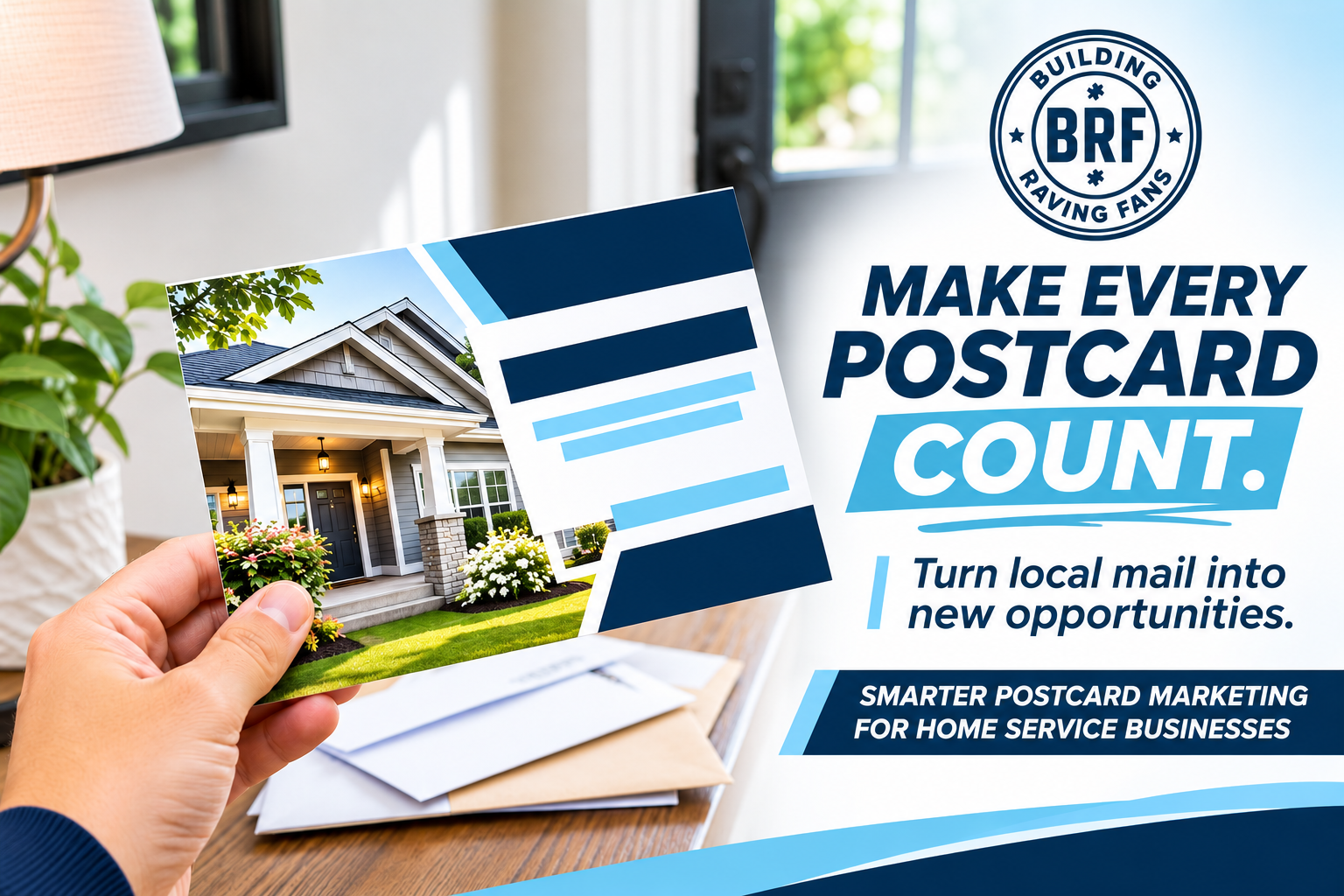
What Makes a Contractor Postcard Stand Out in a Homeowner’s Mailbox?
What Makes a Contractor Postcard Stand Out in a Homeowner’s Mailbox?
A strong contractor postcard does more than announce a service. It earns a second look, makes the homeowner feel the message is relevant to their home, and gives them a clear next step. In a mailbox full of bills, flyers, and promotions, effective contractor postcard marketing depends on thoughtful direct mail design, not just a bold headline or a discount.
For contractors and home service businesses, a postcard can introduce your company to nearby homeowners, reinforce your reputation, or help past customers remember you when a new project comes up. The best postcards combine a specific offer, local relevance, trustworthy imagery, and one clear call to action.
Start With One Clear Message
A postcard has limited space, so resist the urge to fit every service, credential, and promotion onto it. Decide what you want the homeowner to understand and do.
Before designing, answer three questions:
Who is this postcard for?
What homeowner need or opportunity does it address?
What is the one action you want the reader to take?
For example, a roofing contractor might focus on a seasonal roof inspection, while a deck builder might promote a consultation for homeowners planning an outdoor upgrade. A postcard that tries to promote every service at once can leave the reader unsure what matters most.
Make the main message easy to grasp at a glance. The company name, core offer, and next step should be immediately recognizable.
Make the Offer Specific and Relevant
A compelling offer gives homeowners a reason to pay attention. It doesn’t always need to be a discount. It can be a useful service, a timely reminder, or a simple way to explore an upcoming project.
Examples include:
A complimentary project consultation
A seasonal maintenance checklist
A limited-time upgrade or service package
A neighborhood-specific offer
A reminder to plan ahead for a busy season
If you include a discount, explain what it applies to and any important conditions. Avoid vague phrases such as “big savings” without showing the homeowner what they’re getting.
The offer should also match the audience. A homeowner who recently completed a deck project may appreciate maintenance guidance or a referral thank-you, while a nearby homeowner may be more interested in seeing examples of your work or booking an estimate.
Show Why the Message Belongs in Their Neighborhood
Local relevance helps a postcard feel intentional rather than mass-produced. When appropriate, reference the neighborhood, community, or type of home you serve.
A contractor might mention a recent project nearby with the homeowner’s permission or feature a common local need, such as preparing a home for changing weather. Keep the reference accurate and respectful. Don’t imply that you know private details about a homeowner or their property.
Useful ways to add local context include:
Naming the community or service area
Featuring a real project from the area, with permission
Showing the kind of home or project common in the neighborhood
Explaining how your team serves local homeowners
Including a nearby phone number, website, or contact option
The goal is to help the recipient quickly understand, “This company works in my area, and this may be useful to me.”
Use Imagery That Builds Trust
Images should support the message, not compete with it. For home service businesses, real project photography can be especially effective because it shows the quality and style of the work.
Choose one strong image rather than a collage of small, unrelated photos. A clear before-and-after image can work when the transformation is easy to understand. A finished project photo can also help homeowners picture what your company does.
For stronger visual credibility:
Use sharp, well-lit images that reflect your actual work.
Show the project clearly instead of relying on decorative stock photography.
Keep the image uncluttered and relevant to the offer.
Get permission before using a customer’s home or testimonial.
Make sure text remains readable against the image.
If you don’t have a suitable project photo, use a clean, simple visual that supports the service. Avoid imagery that looks unrealistic or promises a result your company can’t guarantee.
Design for a Quick Read
Good direct mail design makes the most important information easy to find. A homeowner should not need to study the postcard to understand what it offers.
A simple layout often works best:
Headline: State the main benefit or offer.
Supporting line: Explain who it’s for or why it matters.
Image: Show the service or outcome.
Proof point: Add one relevant trust signal, such as years in business, a testimonial, or a verified review.
Call to action: Tell the homeowner what to do next.
Use contrast to create a clear visual hierarchy. Keep body copy brief, leave enough open space, and avoid crowding the edges with text. Make sure the company name and contact information are easy to locate.
A postcard should look professional and feel easy to understand not like a miniature brochure.
Add a Trust Signal, Not a Wall of Claims
Homeowners may be unfamiliar with your company, so a relevant trust signal can help reduce uncertainty. Use proof you can substantiate.
Consider including:
A short customer testimonial, with permission
A recognizable local project
A clear service area
A concise credential or verified company fact
A review or reputation cue that leads to more information
Keep the proof specific and modest. A single meaningful testimonial is usually more useful than a long list of unsupported superlatives.
For contractors who want to build a stronger review presence, Building Raving Fans’ Raving Fans Reviews platform helps businesses organize and showcase customer feedback. A postcard can introduce the company, while a well-managed review process can help homeowners learn more before reaching out.
Give the Homeowner One Clear Next Step
A postcard’s call to action (CTA) should be direct and easy to follow. Avoid giving equal weight to several competing actions, such as calling, emailing, visiting multiple pages, and following several social accounts.
Choose the next step that fits the offer:
“Schedule your consultation”
“Scan to see recent projects”
“Request your estimate”
“Visit our website to learn more”
If you use a QR code, place it beside a short explanation of what happens after scanning. Link it to a mobile-friendly page that matches the postcard’s message. Test the code before printing and make sure the destination works.
Include a readable phone number or website as an alternative. Not every homeowner will want to scan a code, and the postcard should remain useful without one.
Connect the Postcard to the Relationship
A postcard can start a conversation, but the relationship shouldn’t end when the mail is delivered. Homeowners may not be ready to act right away. A thoughtful follow-up plan helps your business remain useful and recognizable without overwhelming them.
For example, a contractor might follow a neighborhood postcard with helpful project-planning tips, seasonal maintenance advice, or a relevant email newsletter. Long-term nurture email campaigns can keep the conversation going with useful information instead of repeated sales pitches.
For existing customers, appreciation can also strengthen the relationship. Automated gifting and appreciation programs help contractors recognize meaningful moments such as a completed project, a customer milestone, or a referral with a timely, personal gesture.
And when a customer has a positive experience, scan-to-review QR code cards can make it easier for them to find the review page and share feedback. The request should be respectful and never pressure customers to leave a particular rating.
These touchpoints work best when they feel connected: the postcard introduces or reminds, the follow-up provides value, and appreciation reinforces that the relationship matters.
For more ideas, read Building Trust Through Customer Appreciation and The Contractor’s Guide to Building Raving Fans Through Gratitude.
A Quick Checklist Before You Print
Before approving your next postcard, review it from the homeowner’s point of view:
Is the main offer clear within a few seconds?
Does the message feel relevant to the recipient and neighborhood?
Does the image look authentic and support the offer?
Is the layout easy to scan, with enough breathing room?
Are claims accurate, and are any testimonials approved?
Is there one obvious call to action?
Does the QR code or link work on a phone?
Is there a useful follow-up plan for people who aren’t ready yet?
A postcard doesn’t need to say everything about your business. It needs to give the right homeowner a good reason to notice you and a simple way to take the next step.
Make Every Mailbox Touchpoint Count
The most effective contractor postcard marketing combines clear messaging with a real understanding of the homeowner. A relevant offer, local context, authentic imagery, and an easy CTA can help your postcard stand out. When that first impression is supported by thoughtful follow-up, appreciation, and a consistent customer experience, direct mail becomes part of a relationship, not just another promotion.
Want to make your direct mail part of a stronger customer relationship strategy? Building Raving Fans helps contractors stay top of mind through targeted direct mail, customer appreciation, review-generation tools, and long-term nurture. Book a strategy call to explore a plan for your business.


