How to Choose the Right Neighborhoods for Your Direct Mail Marketing
How to Choose the Right Neighborhoods for Your Direct Mail Marketing
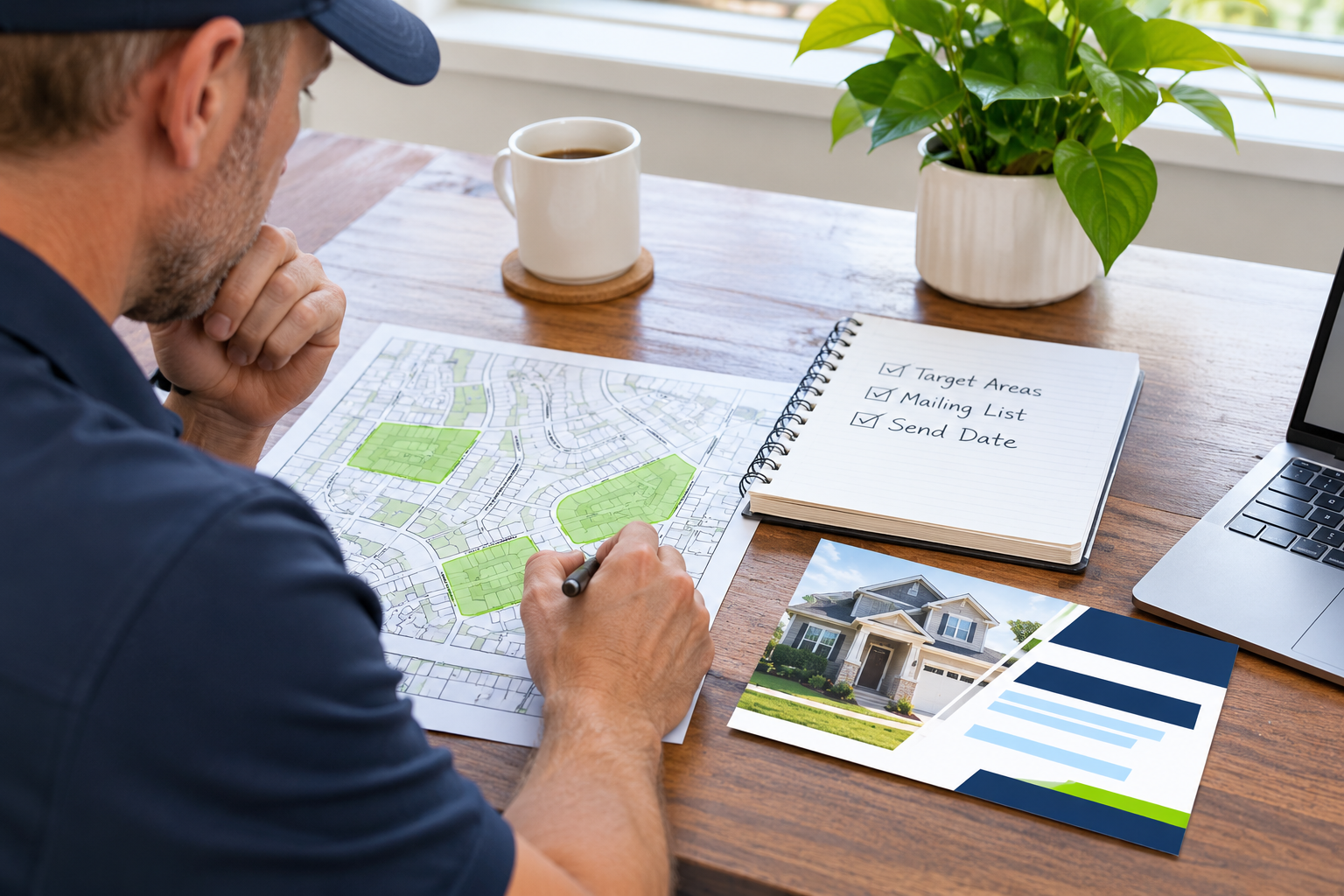
Choosing the right neighborhoods for direct mail marketing can help contractors and home service businesses reach homeowners who are more likely to need their services and avoid spending budget on areas that are a poor fit. The best direct mail marketing neighborhoods aren’t always the largest or wealthiest. They’re the places where your services, past results, timing, and ability to serve align.
A practical neighborhood strategy starts with what you already know: where you’ve completed successful projects, which services are in demand, how far your crews can travel efficiently, and which areas respond to your outreach. From there, direct mail can help you build familiarity with nearby homeowners while supporting the long-term relationships that drive referrals and repeat business.
Start With Your Best-Fit Customer
Before selecting neighborhoods, define the kinds of projects your business wants more of. A contractor focused on deck replacements may have different ideal areas than a company specializing in roofing, painting, or whole-home remodeling.
Consider:
Project fit: Which services are most profitable or strategically important?
Home characteristics: What property types can your team serve well?
Service capacity: How far can crews travel without creating scheduling or cost issues?
Customer experience: Where have you delivered work you’re proud to show?
Growth goals: Are you trying to increase new estimates, referrals, repeat work, or awareness?
This keeps your neighborhood selection connected to business goals, not just mailing volume.
Use Your Completed Projects as a Starting Point
Your own project history is one of the most useful sources for choosing neighborhoods. Map completed jobs and look for areas where you have a meaningful presence or a strong track record.
For each project, record the neighborhood or ZIP code, service type, completion date, and any relevant outcome you can reliably measure. Depending on your business, you may also track whether the customer referred someone, left a review, or returned for another service.
Look for patterns such as:
Areas where you’ve completed several similar projects
Neighborhoods where customers have referred nearby homeowners
Locations where your team can show relevant before-and-after work
Communities where you’ve earned positive feedback and built trust
A cluster of successful projects can give your outreach a more credible local story. You can reference nearby work when appropriate, but always get permission before using a customer’s name, home, or testimonial in marketing.
Evaluate Neighborhood Fit, Not Just Household Data
Public information can help you understand an area, but it should be one part of the decision. A neighborhood’s home styles, property age, and local conditions may be more relevant to your services than a broad demographic label.
For example, a roofing contractor may want to assess roof age and storm-related service patterns. A deck builder might look for homes with suitable outdoor space and projects that match the company’s portfolio. A painting business could prioritize areas where exterior maintenance is a common need.
Use available data thoughtfully and lawfully. Avoid making assumptions about individual homeowners based on sensitive personal characteristics. Focus on property and service factors that are directly relevant to your work.
Consider Timing and Local Conditions
The right neighborhood today may not be the right neighborhood six months from now. Home improvement demand can change with seasons, weather, local development, and the type of project you offer.
Build timing into your plan:
Promote maintenance or inspection services before the season when homeowners typically need them.
Reach out early enough for projects that require planning, design, or permitting.
Align neighborhood mailings with crew availability and the services you can deliver.
Consider whether local conditions create a timely reason for homeowners to learn about your business.
A timely message is more useful than a generic promotion sent without a clear reason.
Factor in Travel Time and Jobsite Efficiency
A neighborhood can look attractive on a map but still be costly to serve. Before expanding your mailing area, consider how travel time affects crew schedules, fuel, project supervision, and your ability to respond quickly.
Map your existing jobs and define a practical service radius. Then identify areas that fit your capacity and business goals. If you’re testing a new area, start with a manageable group of routes or streets rather than committing your full budget at once.
For contractors, the strongest neighborhood may be one where you can deliver excellent work consistently not simply the one with the most homes.
Build a Simple Neighborhood Scorecard
A scorecard helps your team compare areas using the same criteria. Keep it practical; a complicated model isn’t necessary to make better decisions.
Rate each potential neighborhood on factors such as:
Factor | What to consider |
|---|---|
Service fit | Does the area contain homes and projects that match your services? |
Project history | Have you completed relevant work nearby? |
Referral potential | Have past customers recommended you to neighbors? |
Travel efficiency | Can crews serve the area without disrupting operations? |
Timing | Is there a relevant seasonal or local need? |
Test results | Have previous mailings generated responses or qualified inquiries? |
Use the scorecard to narrow your list, then test the strongest candidates. Keep notes on why each area was selected so you can learn from the results.
Test Before You Scale
You don’t need to mail every promising neighborhood at once. Start with a small, clearly defined test that lets you compare results and refine the message.
For a useful test:
Choose a few neighborhoods that meet your service and capacity criteria.
Keep the offer and mailing schedule consistent where possible.
Use a trackable phone number, URL, QR code, or campaign code.
Record responses, qualified inquiries, estimates, and booked projects.
Compare results with the cost of reaching each area.
Don’t judge a mailing only by the number of immediate calls. Some homeowners may keep the postcard, visit your website later, or contact you when a project becomes more urgent. Track results over a reasonable period and compare neighborhoods using the same measurement window.
Make the Message Feel Local
Once you’ve selected a neighborhood, make the postcard relevant to the people receiving it. A local message can be as simple as showing a project your team completed nearby, naming the community you serve, or addressing a home improvement need that fits the area.
Keep the offer specific and the call to action easy to follow. The postcard should explain why the homeowner might care and what to do next.
For more ideas, explore how Building Trust Through Customer Appreciation can strengthen the relationship after the first touchpoint.
Turn Neighborhood Reach Into Long-Term Relationships
Direct mail can introduce your business to nearby homeowners, but it works best as part of a broader relationship strategy. A homeowner may not need your service immediately. Consistent, helpful follow-up can make your company easier to remember when the time is right.
Building Raving Fans helps contractors connect targeted direct mail with other relationship-building touchpoints, including:
Long-term nurture email campaigns that share useful information and keep your business top of mind
Automated gifting and appreciation programs that recognize customers after projects and at meaningful milestones
The Raving Fans Reviews platform to help organize customer feedback and review requests
Scan-to-review QR code cards that make it easier for customers to find the review page and share their experience
These tools should support genuine customer care, not replace it. A thoughtful follow-up, a sincere thank-you, or an easy way to share feedback can help turn a successful project into a stronger ongoing relationship.
You can also read The Contractor’s Guide to Building Raving Fans Through Gratitude for practical ways to make appreciation part of the customer journey.
Review, Learn, and Adjust
Neighborhood selection isn’t a one-time decision. Review your results regularly and update your list as your business, services, and capacity change.
Ask:
Which neighborhoods produced qualified inquiries, not just responses?
Which areas led to estimates, booked jobs, or referrals?
Did the projects fit the services and margins we want?
Were travel and scheduling manageable?
What did homeowners respond to in the message or offer?
Use what you learn to refine both the target area and the postcard. Over time, you can build a more focused plan based on real customer and campaign data.
Choose Neighborhoods With a Relationship in Mind
The right neighborhood is where your business can serve homeowners well, communicate a relevant reason to connect, and build trust over time. Start with your best-fit customers and completed projects, consider service and timing, test carefully, and let results guide your next move.
Want to build a more intentional neighborhood direct mail strategy? Building Raving Fans helps contractors connect targeted direct mail with customer appreciation, reviews, and long-term nurture. Book a strategy call to explore how a relationship-driven approach can support your business growth.


