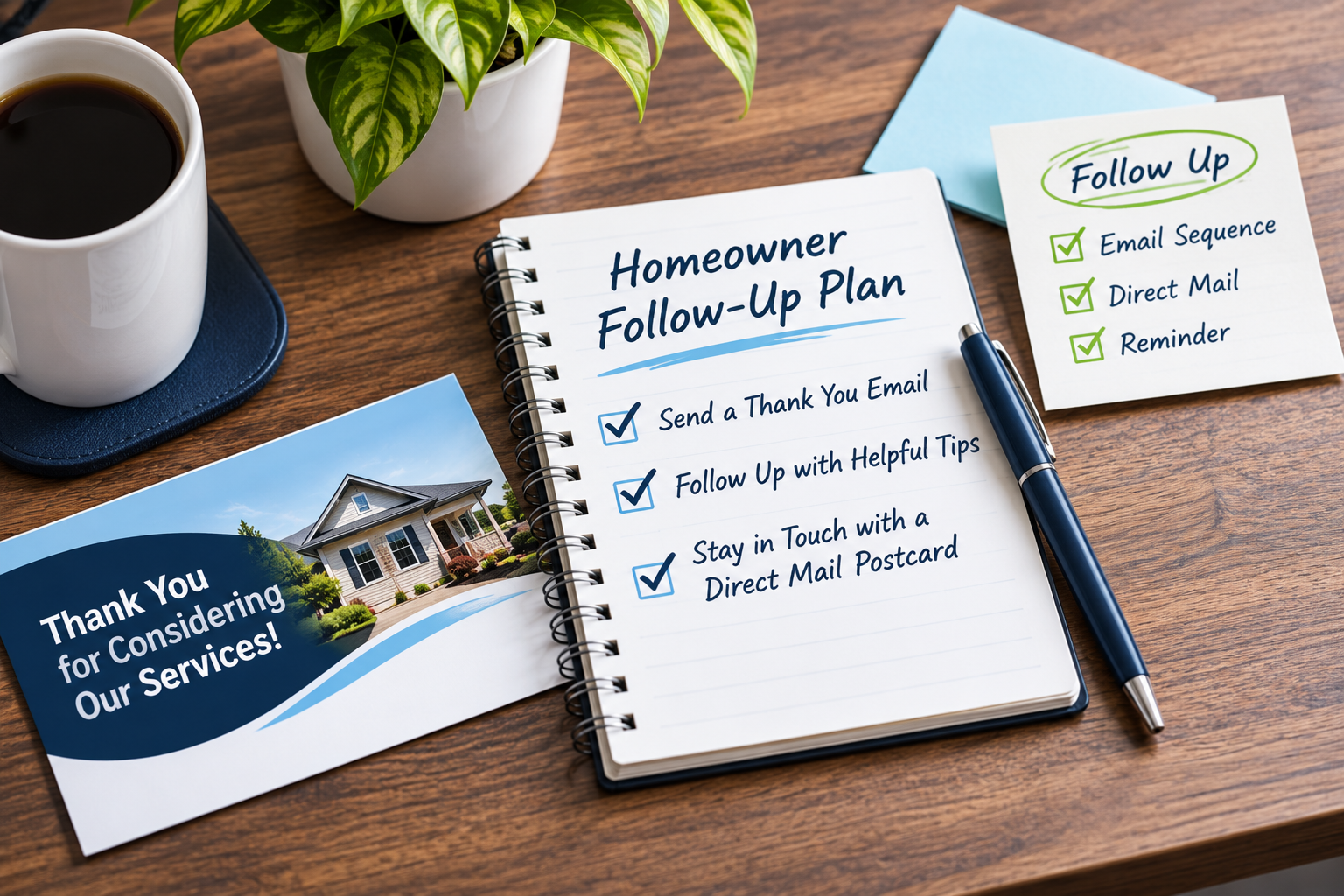
How to Build a Follow-Up Strategy for Homeowners Who Visit Your Website
How to Build a Website Visitor Follow-Up Strategy for Contractors
A homeowner may visit your website, explore your services, and leave without requesting an estimate. A thoughtful website visitor follow-up strategy helps contractors stay visible to interested prospects, answer questions, and make it easier to take the next step without overwhelming them with messages.
The key is to connect each touchpoint to the homeowner’s stage in the decision process. Some visitors are ready to speak with a contractor. Others are still comparing options, gathering ideas, or planning for a future project. A useful strategy respects those differences and combines relevant content, timely follow-up, and consistent relationship-building.
Start by understanding what a website visit means
A website visit is a signal of interest, but it is not the same as a qualified lead. A homeowner might be researching a repair, checking whether you serve their neighborhood, comparing project photos, or looking for a rough sense of cost.
Your website analytics can help show which pages attract attention and where visitors leave. That information can guide improvements to your content and calls to action. But analytics alone generally won’t tell you who a visitor is or whether they’re ready to buy.
Before following up, separate visitors into practical groups:
Known leads: People who have submitted a form, called, or otherwise provided contact details.
Existing customers: Homeowners who may be researching another project or seeking service information.
Eligible identified visitors: Where a compliant visitor-identification service can match website activity to a household or business record.
Anonymous visitors: People you can learn about only through aggregated or non-identifying analytics.
These groups call for different approaches. Use contact information and marketing permissions as the basis for direct outreach. Treat visitor-identification matches as imperfect signals, not proof of an individual’s identity, needs, or intent.
Make the website ready for follow-up
A follow-up strategy starts with a website that helps visitors take the next step. If the site is confusing or the offer is unclear, additional messages may not solve the underlying problem.
Review key service pages and make sure they answer the questions homeowners commonly have:
What services do you provide, and where do you work?
What does the project process look like?
What should a homeowner prepare before requesting an estimate?
What makes your company trustworthy?
How can someone contact you or ask a question?
Use clear calls to action that fit different levels of readiness. “Request an estimate” may work for a homeowner ready to move forward, while “See recent projects” or “Learn what to expect” can help someone who is still researching.
Customer reviews and project examples can also reduce uncertainty. For ideas on strengthening credibility, see Building Trust Through Customer Appreciation.
Build a simple, stage-based follow-up plan
A good contractor lead nurturing strategy is consistent without being repetitive. The exact timing will depend on your sales cycle, service, and homeowner preferences, but a simple framework can help your team stay organized.
1. Respond promptly to direct inquiries
When someone submits a form or requests an estimate, acknowledge the inquiry and explain what happens next. If a team member needs to call, set a realistic expectation for when they’ll reach out.
A useful first response should:
Confirm you received the request
Reflect the service or project they asked about
Explain the next step and expected timing
Make it easy to reply or ask a question
Avoid sending a generic sequence that ignores the homeowner’s actual request. A personal, relevant response is more helpful than a long list of automated messages.
2. Nurture prospects who aren’t ready yet
Some homeowners may tell you they’re planning a project for later. With appropriate permission, a long-term nurture email campaign can keep your company visible by sharing useful information over time.
Helpful email topics might include:
Questions to ask before hiring a contractor
How to prepare for an estimate
Project planning and maintenance tips
Examples of completed work
Seasonal considerations relevant to your services
Keep the content useful, spaced appropriately, and easy to unsubscribe from. The aim is to be a helpful resource, not to pressure someone into a decision before they’re ready.
3. Follow up on eligible website activity carefully
If you use a website visitor-identification service, first confirm how it works, what makes a visit eligible, what data is matched, and what privacy and opt-out requirements apply.
Where a household match is available, and direct outreach is permitted, consider a relevant, low-pressure touchpoint. For example, a contractor might send a general introduction or a seasonal service reminder to an eligible household in its service area.
Avoid language that suggests you know exactly what an individual viewed online. A match may represent a household, not the person who browsed, and it does not establish purchase intent.
Let email, direct mail, and other touchpoints work together
Different channels serve different purposes. Email can deliver practical information. Direct mail can provide a physical reminder. A phone call can answer questions when a homeowner has invited contact. Reviews and project examples can help build confidence.
The strategy works best when each touchpoint adds something rather than repeating the same pitch.
Email: useful information over time
For people who have provided their email and the appropriate permission, send relevant messages based on their stage. A homeowner who requested an estimate may need process details, while someone planning a project for next season may appreciate a planning checklist.
Direct mail: a tangible reminder
Direct mail can help maintain visibility with eligible prospects when it is relevant and permitted. A postcard might introduce your company, highlight a service, share a project-planning tip, or invite the homeowner to learn more.
If you use Site-to-Mailbox or a similar program, understand the eligibility and matching process before launching. Direct mail should feel like thoughtful marketing, not a message that reveals or implies private browsing activity.
Reviews and project examples: evidence that supports a decision
Homeowners often want reassurance that a contractor does reliable work and communicates well. Make it easy to find authentic customer feedback and examples of completed projects.
Building Raving Fans’ Raving Fans Reviews platform can support a consistent review process. Scan-to-review QR code cards can also give customers a convenient way to access a review destination after a completed project. Use them to invite honest feedback, never to pressure customers for positive reviews.
Appreciation: strengthen the relationship after the project
When a prospect becomes a customer, the follow-up strategy should evolve. Thank-you messages, helpful post-project information, and thoughtful appreciation can reinforce the relationship and create a better foundation for future work and referrals.
Automated gifting and appreciation programs can help teams deliver those gestures consistently while keeping the message personal and sincere.
For more on coordinating the customer experience, read Every Touchpoint Matters: Mapping the Contractor Customer Journey.
Set sensible limits and protect trust
More follow-up is not always better. Too many messages, irrelevant offers, or unexpected contact can damage the trust you’re trying to build.
Set clear rules for your team:
Use contact details only in ways permitted by applicable laws and the person’s preferences.
Honor opt-outs and suppression requests across your systems.
Avoid contacting people through channels they have not agreed to use.
Keep messages relevant to your services and the recipient’s likely needs.
Review vendor practices and data handling before using visitor-identification tools.
Make it easy for someone to ask a question or stop receiving marketing.
For anonymous visitors, use aggregated analytics to improve your website and content rather than trying to identify or contact individuals without a valid basis.
Measure whether the strategy is helping
Track outcomes that reflect progress through the customer journey not just the number of messages sent.
Useful measures include:
Website inquiries and estimate requests
Response and appointment rates
Qualified leads and estimates completed
Leads that return after a nurture touchpoint
Direct-mail responses, using a trackable URL, QR code, or campaign-specific offer
Jobs sold and cost per qualified opportunity
Unsubscribes, complaints, or other signs that outreach is unwelcome
Review results by channel and audience where reliable data is available. If a sequence produces little engagement, revisit its timing, message, audience, or call to action. Don’t assume that every sale following a marketing touchpoint was caused by that touchpoint.
Make follow-up feel like helpful service
A strong website visitor follow-up strategy is not simply a series of reminders. It is a coordinated way to be useful while a homeowner considers a project.
Start with a clear website, respond thoughtfully to direct inquiries, nurture known prospects with relevant information, and use eligible direct-mail opportunities responsibly. Then carry the same care into reviews, customer appreciation, and post-project communication.
Building Raving Fans helps contractors connect relationship-focused marketing through long-term nurture email campaigns, review tools, automated appreciation programs, and scan-to-review QR cards. These touchpoints can support a consistent experience from first inquiry to lasting customer relationship.
Ready to build a follow-up strategy that keeps your business visible and puts relationships first?
Contact Building Raving Fans to discuss a practical approach for your team.


