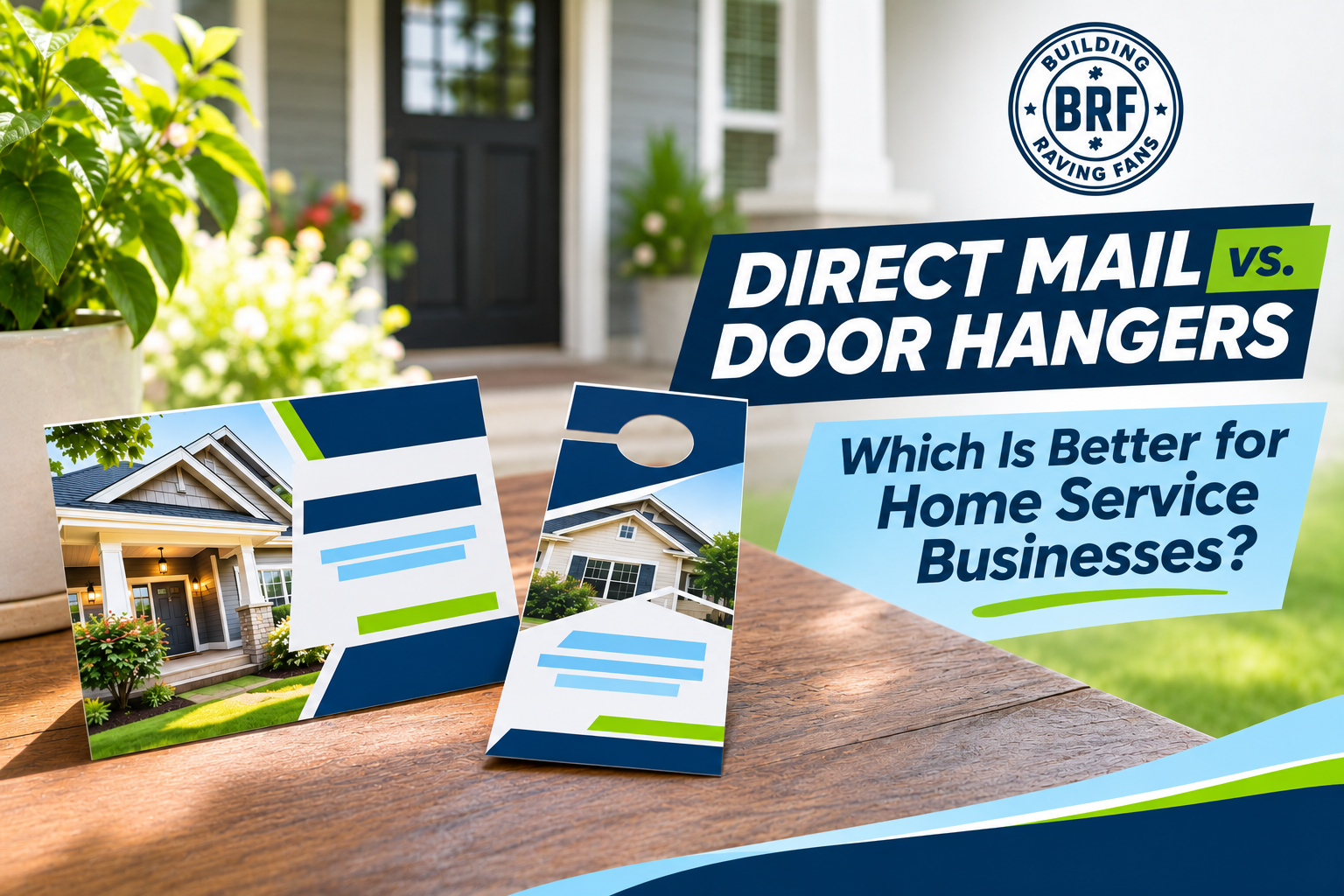
Direct Mail vs. Door Hangers: Which Is Better for Home Service Businesses?
Direct mail vs. door hangers is a common decision for contractors looking to reach homeowners in a specific service area. Both can introduce your business locally, promote an offer, and create opportunities for future work, but they reach people differently. The right choice depends on your audience, campaign goal, distribution plan, and how you’ll follow up after the first touch.
For home service businesses, the strongest contractor marketing strategies don’t treat a printed piece as a one-time pitch. They use it to begin a relevant conversation, build familiarity, and stay connected until a homeowner is ready to act.
Direct Mail and Door Hangers: What’s the Difference?
Direct mail is typically delivered through the postal system to selected addresses or mailing routes. It can include postcards, letters, or other printed pieces, and it gives businesses ways to define and track their audience.
Door hangers are printed pieces placed directly on a home’s door or handle, usually by a team walking a route. They can be useful for reaching a compact area around a jobsite or service call.
Neither format is automatically better. Each has strengths and limitations that should shape how you use it.
Targeting: Who Are You Trying to Reach?
Direct mail is often a better fit when you want to select an audience using mailing lists, geographic boundaries, or known customer and prospect data. Depending on the list and your process, you may be able to target specific routes, neighborhoods, or customer segments.
Door hangers are naturally tied to physical routes. They can be practical when you want to reach homes close to a current job, introduce your company on nearby streets, or cover a small area with a hands-on distribution effort.
Ask yourself:
Are you targeting a defined neighborhood or a broader service area?
Do you have a list of addresses that match your campaign?
Is the offer relevant to homes near a recent project?
Can your team distribute door hangers consistently and respectfully?
For example, a contractor completing a deck project may use door hangers on nearby streets to introduce the work and invite neighbors to learn more. A company promoting a seasonal service across several neighborhoods may prefer a planned direct mail drop.
The best targeting method is the one that connects your offer to the right homeowners without wasting effort or budget.
Distribution: Planned Delivery or Hands-On Placement?
Direct mail offers a structured distribution process. Once your audience, design, quantity, and schedule are set, the pieces can be prepared and delivered through the selected mailing method. That can make it easier to plan a campaign across multiple routes or repeat it on a schedule.
Door hangers require people to walk the area and place the pieces. That gives the team a physical presence in the neighborhood, but it also means distribution time, route planning, weather, and local rules matter.
Before choosing, consider:
Labor: Who will prepare and distribute the pieces?
Coverage: How many homes can you reasonably reach?
Timing: Does the message need to arrive on a particular date?
Consistency: Can you repeat the campaign with similar coverage?
Local requirements: Are there property, building, or municipal restrictions to check?
Door hangers should never be placed where they’re prohibited or where they create a safety or access issue. Always confirm applicable rules and respect “no solicitation” or similar notices.
Personalization: Which Format Feels More Relevant?
Both formats can be personalized, but in different ways.
Direct mail can be tailored to a household, neighborhood, service history, or campaign segment when the business has accurate, appropriate data. A postcard might reference a local project, offer a seasonal reminder, or speak to a specific service need.
Door hangers can feel locally relevant because they’re distributed directly in the area. A contractor can use them near an active jobsite or in a neighborhood where the company recently completed similar work. Keep claims accurate, and get permission before using a customer’s name, property, or testimonial.
Personalization doesn’t mean adding a homeowner’s name to every headline. It means giving the recipient a clear reason the message may matter to them.
Design: Make the Message Easy to Understand
Whichever format you choose, keep the message focused. A printed piece should quickly communicate:
Who you are
What you offer
Why it may matter to the homeowner
What to do next
Use one primary offer and one clear call to action. A QR code can link to a relevant page, but explain what the homeowner will find after scanning and test the link before printing. Include a readable website or phone number as an alternative.
For more design guidance, read What Makes a Contractor Postcard Stand Out in a Homeowner’s Mailbox?. A clear offer, authentic project imagery, and a simple next step help printed marketing feel useful rather than cluttered.
Cost and Measurement: Compare More Than Printing
The cost of a campaign includes more than the printed piece. For direct mail, account for printing, postage, list preparation, and campaign management. For door hangers, include printing, route planning, labor, travel, and the time required to cover the area.
Then decide how you’ll measure performance before distribution. Depending on your goal, you might track:
Calls or form submissions
QR code visits or campaign-specific landing page activity
Qualified inquiries and estimates booked
Jobs won and revenue attributed
Cost per qualified lead or booked project
Use a consistent measurement window and compare similar offers and audiences when possible. A door hanger may generate quick interest near a jobsite, while direct mail may support a longer campaign. Don’t declare a winner based only on immediate responses if one approach is designed to build awareness over time.
Follow-Up: Turn a Printed Piece Into a Relationship
A postcard or door hanger may reach a homeowner who isn’t ready to book. That doesn’t mean the campaign failed. The homeowner may need your service later, or may remember your company when a neighbor asks for a recommendation.
Plan the next step before the pieces go out:
Send interested homeowners to a useful landing page.
Follow up promptly with people who request an estimate.
Share helpful information through long-term nurture email campaigns, where recipients have chosen to receive your communications.
Thank customers after a project and stay connected with relevant, respectful touchpoints.
Building Raving Fans helps contractors connect outreach with relationship-building systems. Automated gifting and appreciation programs can help businesses recognize customers after meaningful milestones. The Raving Fans Reviews platform and scan-to-review QR code cards can support a convenient review process after a positive customer experience.
These tools aren’t substitutes for good service. They help make appreciation, feedback, and follow-up more consistent.
For additional ideas, explore The Contractor’s Guide to Building Raving Fans Through Gratitude and Every Touchpoint Matters: Mapping the Contractor Customer Journey.
When Direct Mail May Be the Better Choice
Consider direct mail when you want to:
Reach a defined audience or mailing area
Plan a repeatable campaign across multiple neighborhoods
Use customer or prospect data appropriately to tailor the message
Coordinate delivery with a seasonal offer or broader marketing plan
Measure response through a dedicated landing page, phone number, or campaign code
It can be especially useful when you need a consistent way to reach homeowners beyond the immediate area around a jobsite.
When Door Hangers May Be the Better Choice
Door hangers may fit when you want to:
Focus on a compact area around an active project
Introduce your company to nearby homes
Distribute a time-sensitive message in a specific area
Have a team available to walk routes and manage placement
Support a local effort with a simple, highly relevant offer
They can be a practical neighborhood touchpoint, provided the distribution is permitted and carried out respectfully.
A Simple Way to Choose
Start with your goal, not the format.
If you need structured reach across selected mailing routes, direct mail may be the stronger option. If you want to introduce your company to a small area near a current project, door hangers may make more sense. In some cases, a coordinated approach can work: use door hangers near the jobsite and direct mail for a broader, carefully selected audience.
Test one approach at a manageable scale, track qualified responses and booked work, and use what you learn to refine the next campaign.
Make Your Local Outreach Count
Direct mail and door hangers can both help home service businesses become more visible in the neighborhoods they serve. The difference comes down to targeting, distribution, personalization, measurement, and the follow-up that comes afterward.
Want to connect your neighborhood outreach with a stronger customer relationship strategy? Building Raving Fans helps contractors bring together targeted direct mail, customer appreciation, review tools, and long-term nurture. Book a strategy call to explore an approach that fits your business and service area.


